
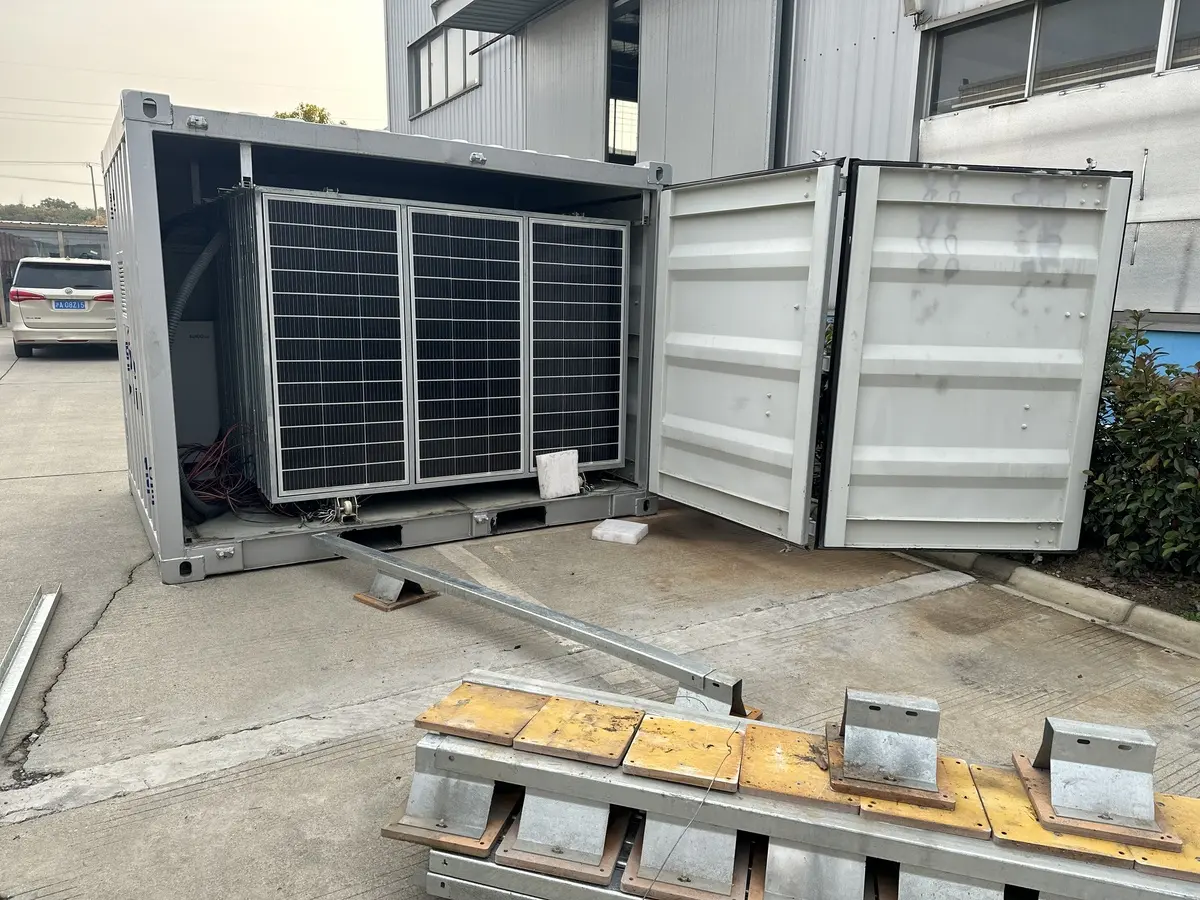
When it comes to designing a solar project that involves shipping containers, one of the first things that typically comes into consideration is what follows: how many solar panels can be placed inside a standard 20-foot shipping container? Of course, the solution to this problem depends on a number of considerations, including the solar panel sizes, among others.
A standard 60-cell module, which is about 1.65m by 1m (65in by 39in), will require about 250 to 300 modules to fill a 20ft container. However, due to stacking, these will be arranged flat, ensuring protection of each module as it is cushioned by layers of packaging. A 72-cell module, which is 2m by 1m, will require 200 to 220 modules to fill a 20ft container.
We will elaborate on the details, aspects, and insights for better planning of solar logistics using the container concept in the next section.
Factors Affecting Solar Panel Capacity in a Container
There are several variables that affect the number that can be stored in a 20ft container:
Panel Size
Standard 60-cell modules: ~1.65m x 1m
Standard 72-cell panels: ~2m x 1m
Packing Orientation
The panels can either remain stacked horizontally or with very slight incline support using padding.
Inclined stacking results in a loss of capacity, but it can be a better safeguard
Protective Materials
The foam or cardboard or wooden framing between panels precludes scratch or breakage.
The use of high thickness pads means fewer panels in a container.
Contained Vessel
Standard 20ft containers are approximately 6.06m (L) x 2.44m (W) x 2.59m (H)
The usable volume of efficiency gets reduced marginally by structure and door components.
The weight limit
Panels are relatively light individually, but a fully loaded 20ft container can reach the maximum shipping weight of 28,000 kg.
Stacking is done in a way that does not allow for damage due to compression of weights.
Typical Layout Example
To better explain this, here is an illustration of a 20ft container configuration for regular 60-cell panels:
| Panel Size | Panels per Layer | Layers | Total Panels | Notes |
|---|---|---|---|---|
| 1.65m x 1m | 20 | 12 | 240 | Flat stacking with thin padding |
| 1.65m x 1m | 18 | 14 | 252 | Slightly inclined stacking for safety |
| 2m x 1m | 16 | 12 | 192 | 72-cell panels require more space |
It appears that proper layer design and utilization of light protective frames enable you to approach the upper bounds of maximum panel capacity without threatening damage to panels.
Further Considerations
Although it would be highly attractive to maximize the number of panels per container, the following practical considerations exist:
- Handling & Transportation: Because there are fewer panels in each layer, they can be forklifted/handled without fear of falling off.
- Climate Protection: Solar cells are highly susceptible to water. Careful packaging and water protection are required and especially necessary when being shipped internationally.
- Custom Crates: In some instances, custom wooden crates or even aluminum crates may be employed to secure panels better.
Industry Trends and Future Out-Look
Solar energy storage systems based on shipping containers are gaining popularity in modular solar farms and energy solutions during relief operations in disaster situations. As the demand for portable solar solutions continues to rise globally, players are innovating in terms of:
- Improving stackable frames so that more panels could be placed inside the container without damaging them.
- Employing lightweight composite pallets in order to minimize weight and maximize space.
- Involves the design of foldable/modular solar containers like the foldable solar container offered by LZY Energy. The container can be unfolded at a construction site, allowing more capacity for the panels, in addition to providing a reduced volume for easy transportation.
By 2027, container logistics for solar energy is expected to become more standardized with respect to optimized layouts for containers to ensure maximum capacity for portability and safety. This is likely to enhance the usage of “LZY Energy’s foldable solar container” for large solar deployments.
Tips & Tricks for Container Loading
In case you are considering transporting solar panels through a 20ft container:
- Determine panel sizes and approximate layer numbers.
- It is recommended to use padding for protection against any possible scratches and glass breakage.
- Do not overload above the weight capacity of the container.
- You may want to consider modular frames for easier unloading of the products at the point of delivery.
- Factor in ventilation, where storage of panels for a longer period is considered within the container.
Conclusion
Thus, on average, 200-300 solar panels can be placed inside a 20ft container. It is very important for all of us to understand the dimensions of the solar panels and the container, along with the precautionary measures that need to be followed. Solar panel transport solutions will soon get even more optimized with advancements in solar technology.