
What is a Collapsible Solar Panel Container?
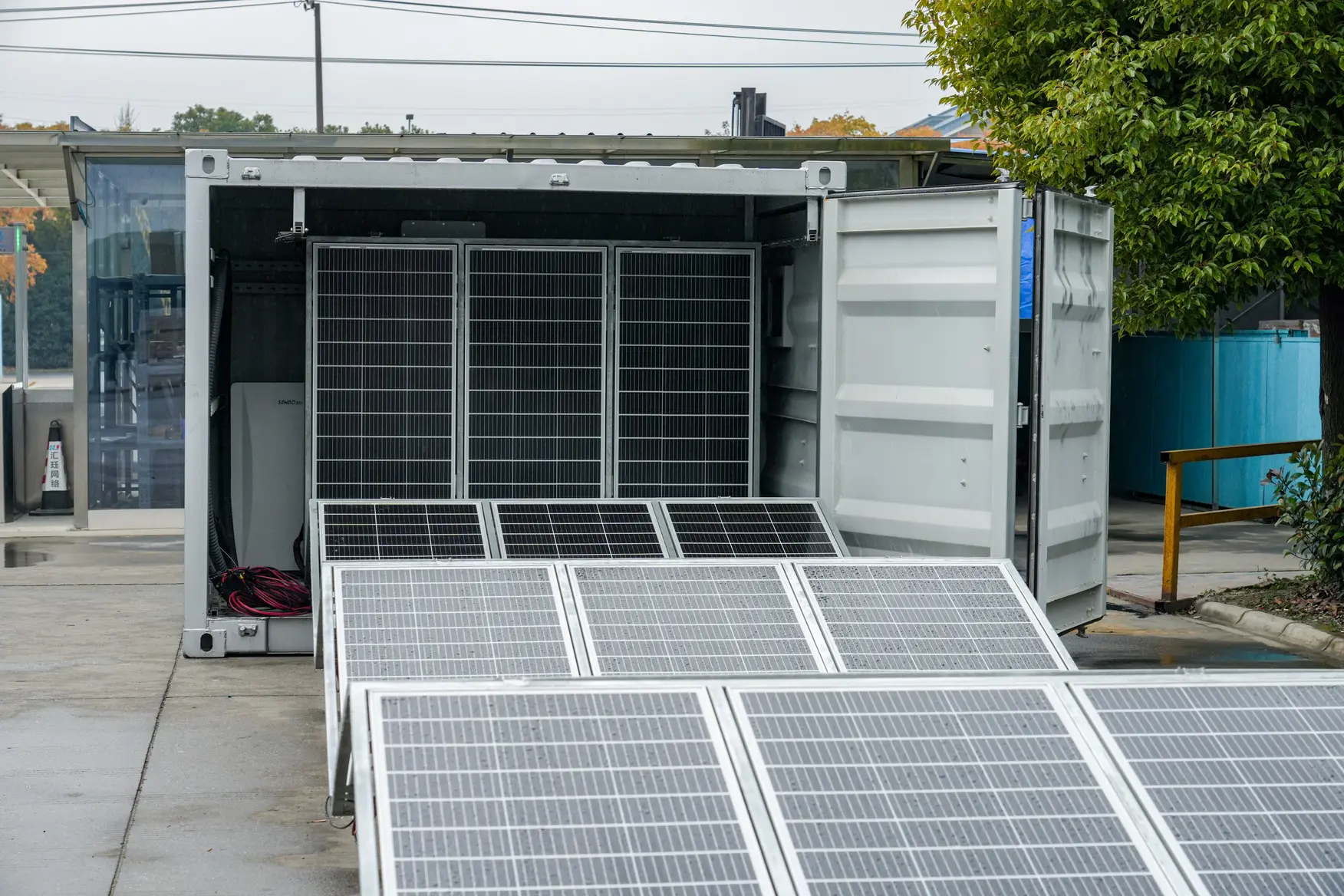
A collapsible, or mobile, solar panel container is a self-contained, transportable solar power system built within a standard shipping container frame. It contains high-efficiency photovoltaic (PV) panels, inverters, and often batteries, all housed inside a weather-resistant steel enclosure. When set up, hinged or foldable panels unfold or slide out from the container to create a compact solar array. Unlike fixed solar farms, these units come pre-assembled and are plug-and-play, requiring minimal on-site installation. For instance, LZY Energy’s Mobile Solar PV Container is constructed on a 20-foot general-purpose container, outfitted with 120 high-output (480W) N-type solar modules and 42 galvanized steel foldable frames for quick deployment. Essentially, a collapsible container merges the portability of a shipping container with the clean energy of solar panels—forming a complete off-grid power station that can be shipped, parked, and powered up almost anywhere.
Who Uses Them and For What?
These systems are intended for any scenario that requires dependable power far from the electrical grid.
Primary users include:
- Construction and Mining Projects: Remote sites such as roadworks, tunnels, and mines often lack access to utility power. Mobile solar containers supply electricity for lighting, tool charging, and communications without relying on diesel generators.
- Disaster Relief and Humanitarian Aid: In emergency camps and field clinics, quick access to power is vital. Collapsible containers can be transported to operate medical devices, refrigeration, and communication equipment even when infrastructure is compromised.
- Outdoor Events and Infrastructure: Large festivals, sports events, and outdoor film productions use portable solar containers to quietly power stages and equipment. They also serve as backup power for telecom towers and remote cell stations to maintain connectivity in rural locations.
- Military and Government: Defense and government agencies deploy foldable solar containers for rapid setup at base camps and surveillance sites. The military appreciates their low logistical demands (no fuel required) and fast installation for field operations.
In summary, any organization needing immediate, clean power away from permanent infrastructure can benefit from a collapsible solar container. There are cases where construction teams and NGOs have installed them in less than a day; as one project engineer remarked, the container went from unloaded to fully operational within hours, unlike the days needed for a ground-mounted solar array.
Benefits Over Conventional Solar Systems
Collapsible solar containers provide several distinct advantages:
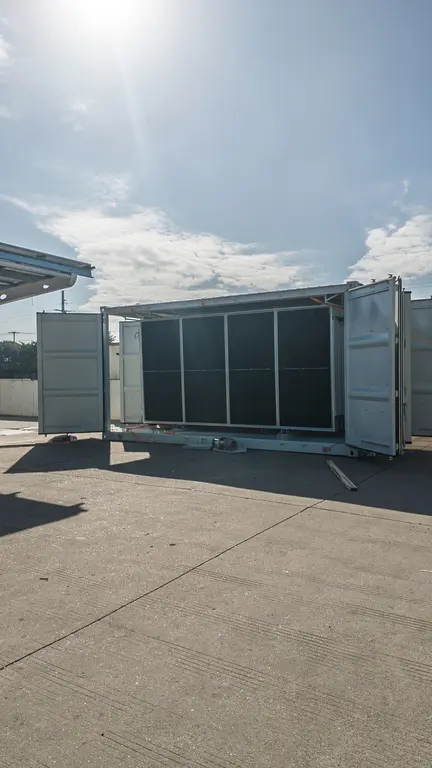
- Quick Setup: A complete containerized photovoltaic (PV) system can be installed within a few hours. For instance, a 140 kWp model with 240 modules (covering over 720 m²) can be unfolded and connected in about five hours. In contrast, traditional ground-mounted solar arrays often require site preparation, foundation work, and several weeks of labor.
- Complete Portability: These containers comply with standard shipping dimensions, allowing transport by truck, rail, or ship to nearly any location. Upon arrival, the container serves as a sturdy, weather-resistant enclosure without needing extra racks or mounting hardware. Unlike fixed PV farms, solar containers can be moved or redeployed as requirements evolve.
- Integrated, Plug-and-Play Design: Each container usually includes built-in inverters, charge controllers, and sometimes batteries. For example, LZY Energy’s container features an all-in-one AC/DC cabinet housing its electronics. This simplifies installation since technicians only need to unfold the panels and connect to the local load or microgrid. Traditional solar setups often require separate purchases of inverters, mounting systems, wiring, and site construction.
- Off-Grid and Backup Capabilities: Many collapsible containers come with battery storage, allowing them to operate overnight or during cloudy periods. They function like microgrids, providing power even without grid access. Conventional rooftop or utility-scale solar systems without storage cannot supply power during outages or in remote areas.
- Emission-Free Operation: Once operational, these solar containers produce electricity without fuel consumption. Unlike diesel generators, they generate no exhaust emissions or noise. Companies using solar containers have reported up to a 70% reduction in fuel usage compared to running generators, eliminating fuel supply challenges on remote sites and significantly reducing greenhouse gas emissions.
- Flexible Scalability: Multiple containers can be combined to increase capacity. Businesses can start with a single 40 kW or 100 kW container and add more units as demand rises. Traditional solar installations require designing for large capacity upfront, and expanding later often involves installing new panel arrays and inverters. Collapsible containers enable customers to scale their solar capacity gradually.
Comparing Features of Collapsible Solar Containers vs. Traditional Fixed Solar
| Feature | Collapsible Solar Container | Traditional Fixed Solar Array |
|---|---|---|
| Deployment Time | ~5 hours to unfold 140 kWp system | Several days to weeks (site work + install) |
| Mobility | Easily transported by truck/ship (relocatable) | Stationary once installed (no relocation) |
| Self-Contained | All hardware in one unit (panels, inverter, batteries) | Components (panels, inverters, racking) split at site |
| Off-grid Ready | Battery storage often included (runs independent of grid) | Usually grid-tied or requires separate storage |
| Emissions | Zero during operation (no diesel) | Zero during operation, but depends on grid source |
| Footprint & Site Prep | Minimal (standard container footprint, no foundations) | Large area needed, plus ground prep and mounting |
Global Demand for Portable Energy Solutions
The market for portable solar power is expanding quickly. For instance, in North America, the mobile solar systems market was valued at $245.5 million in 2022 and is expected to reach $1.4 billion by 2031, growing at a compound annual growth rate (CAGR) of 20.3%. This growth is fueled by increasing off-grid power requirements in sectors such as construction, telecommunications, events, and disaster response. Experts highlight that as more companies look for sustainable, on-demand power solutions away from the grid, the demand for easily deployable solar units is rising sharply.
Key trends include:
- Expansion in Remote and Off-Grid Areas: With a focus on energy access and resilience, governments and businesses are investing in off-grid projects. Foldable solar containers are ideal for microgrids and remote infrastructure like mining sites and rural electrification.
- Integration of Energy Storage: New solutions combine high-capacity batteries with photovoltaic systems, effectively creating small-scale power plants. This guarantees continuous power supply even in isolated locations. For example, LZY Energy’s container is designed to work with battery storage to provide consistent energy around the clock.
- Speed and Adaptability: In emergencies and fast-paced projects such as military operations or disaster relief, quick-deployment energy solutions are essential. Folding solar containers require minimal permits or construction work, making them a preferred choice for urgent power needs.
- Environmental and Regulatory Influences: Stricter emissions standards and renewable energy targets are encouraging companies to adopt clean onsite power generation. Collapsible solar containers assist businesses in achieving sustainability objectives rapidly. Industry analysts predict widespread adoption, noting that “containerized solar power is expected to grow rapidly across various sectors” as costs decrease and technology advances.
- Off-Grid and Quick-Setup Infrastructure: Modern companies require backup power solutions. Mobile solar containers can be strategically placed as emergency power centers. For instance, telecom providers often install solar units at remote towers to maintain connectivity during power failures. Event planners use them to reduce noise and eliminate the need for fuel trucks. Governments even offer subsidies for portable solar and storage projects, acknowledging their importance in building resilient infrastructure.
Environmental and Operational Advantages
For business clients, solar containers offer distinct benefits:
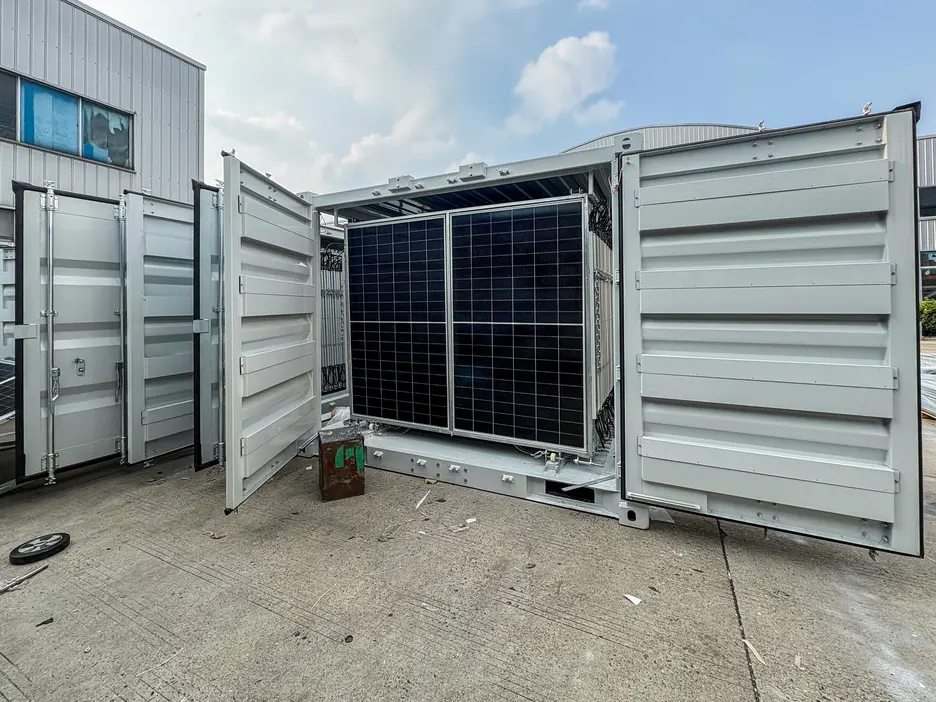
- Reduced Carbon Emissions: By replacing diesel generators and lowering grid dependency, these systems significantly cut greenhouse gas emissions. LZY Energy’s containers feature bifacial panels that capture additional sunlight reflected from the ground, enhancing efficiency while remaining environmentally friendly.
- Lower Noise and Improved Air Quality: Operations near sensitive areas such as hospitals, residential neighborhoods, or wildlife habitats benefit from the quiet and clean operation of solar power. Unlike generators, foldable solar systems produce no exhaust, preserving local air quality.
- Cost Efficiency and Return on Investment: Although the upfront cost is higher than a basic generator, fuel expenses drop to zero and maintenance needs are minimal. Research indicates companies can reduce fuel costs by up to 70% using solar containers, resulting in a quick return on investment. Additionally, these containers avoid lengthy permitting and construction processes, saving money initially.
- Dependability: These systems often include remote monitoring and are built to be durable. They can endure severe weather conditions (many panels are double-glass and weatherproof) and can be folded away during storms. Clients can trust that their power source is both sustainable and reliable.
- Flexibility: After installation, the same steel container can be repurposed for storage, office use, or relocated to another site. This versatility maximizes the value of the investment.
LZY Energy’s Offering
LZY Energy’s Mobile Solar PV Container demonstrates these advantages. It uses foldable panels with high-efficiency cells to generate substantial power from a compact 20-foot unit. Incorporating feedback from field trials, a trained team can have an LZY container operational within 4 to 6 hours. One engineer on site mentioned that unfolding all 42 panels and connecting the built-in inverter took less time than arranging a truck delivery. As LZY’s product team noted, “the portability and plug-and-play design ensure projects stay on schedule, even in remote locations.”
By selecting LZY Energy’s collapsible solar panel container, commercial users obtain a ready-to-use green power station. Whether serving as backup for a factory, forming part of a hybrid microgrid, or powering a construction site, this technology delivers dependable, clean energy exactly where and when it’s needed. As global demand for renewable energy rises, containerized solar solutions like LZY’s are set to become a standard component in commercial energy strategies.