
Why is off-network storage more important in 2025?
From RV travel, outdoor camping, remote cottages, to the emergency backup power demand brought about by the frequent occurrence of extreme weather, "off-network life" is no longer the choice of a few people, but has become a lifestyle that is increasingly concerned by home users.
At the same time, the solar + battery system will become the fastest growing household energy portfolio in the world in 2025. From the United States and Europe to Southeast Asia and Australia, the demand of home users for off-network energy storage is rising.
Why? Because the technology has changed.
The off-grid solar cells in 2025 have:
Longer cycle life (2000–6000 times or even higher)
Higher energy density
More intelligent BMS (Battery Management System)
More stable deep discharge performance
Higher temperature adaptation range
This means that:
Off-grid operation is no longer a toss, but a truly feasible, reliable and economical energy solution.
What is off-grid solar cells? Why is the requirements higher than that of the network-lined battery?
The off-grid system means that you don't rely on the power grid, and all energy comes from solar panels and batteries to store energy.
Therefore, off-grid batteries must meet stricter conditions than ordinary batteries:
1. Support deep discharge (DOD ≥ 80%)
In the off-network scenario, the battery needs to be charged and discharged every day, and high DOD is the basis of stability.
2. Long life and high number of cycles (2000–6000 times)
The daily cycle means that the service life directly affects the cost of the system.
3. Strong adaptability to extreme temperatures
Whether it is placed in RVs, battery compartments, or energy storage cabinets in remote cottages, low-temperature performance is particularly important.
4. Stable output high power
The off-grid system often drives refrigerators, water pumps, induction cookers and other high-power equipment, so the battery must have a high discharge magnification.
5. Decide whether off-network life can "run normally"
An unstable battery will paralyze the entire off-line system at a critical moment.
Comparison of mainstream off-line battery types in 2025 (advantages and disadvantages + usage scenarios)
The following are the four most common types of batteries in off-network energy storage on the market at present, and a comparison table is attached.
1. LiFePO4 (lithium iron phosphate) battery - the best choice in 2025
Advantages:
Long cycle life (4000–6000 times)
High security (the strongest thermal stability)
Excellent deep discharge performance
Light weight and maintenance-free
Suitable for long-term off-network operation
Disadvantages:
The initial cost is slightly higher than that of lead acid.
Applicable:
Home off-line / RV / ship / remote cottage / long-term backup power supply
2. Lithium-ion NMC battery (high energy density)
Advantages:
Higher energy density and lighter weight
Suitable for scenes with limited space
Disadvantages:
The security is slightly weaker than that of LiFePO4
The service life is shorter than LiFePO4
Applicable:
Outdoor portable power supply / mobile application
3. AGM / GEL lead-acid battery (limited budget but short life)
Advantages:
Low initial cost
Good compatibility
Disadvantages:
Short life (300–800 times)
Heavy weight
Not suitable for deep discharge
High maintenance cost
Applicable:
Limited budget, backup-based system
4. Solid-state battery (future trend)
Advantages:
Extremely high energy density
Higher security
Lower self-electricity
Disadvantages:
The price is high and there are few brands to choose from.
2025 is still in the early stage.
Applicable:
Industry trends in the next 3–5 years are not recommended for large-scale application in 2025.
Battery comparison table
| Battery Type | Cycle Life | Safety | Deep Discharge | Cost | Application Scenarios |
| LiFePO₄ | 4,000 – 6,000 cycles | ★★★★★ | ★★★★★ | Med. | Top choice for off-grid |
| NMC Li-ion | 2,000 – 3,000 cycles | ★★★★☆ | ★★★★☆ | High | Weight-sensitive applications |
| AGM / GEL | 300 – 800 cycles | ★★★☆☆ | ★★☆☆☆ | Low | Budget installations |
| Solid-state | 4,000 – 10,000 cycles* | ★★★★★ | ★★★★★ | High | Next-gen technology |
How to judge whether a battery is suitable for off-grid? ( Super practical guide)
The following are the evaluation indicators that off-line users are most concerned about:
1. Cycle life
Off-network users cycle once a day,
3000 times ≈ 8 years of life
6000 times ≈ 15 years of life
2. Dissipation depth (DOD)
The higher the better:
LiFePO4 can usually reach 90–100%
The lead acid is only about 50%.
3. Capacity (Ah) and total energy (kWh)
What you really need to see is kWh = voltage × Ah / 1000.
4. Voltage (12V / 24V / 48V)
Off-network home system recommendation: 48V battery pack
Higher efficiency and lower loss.
5. BMS (Battery Management System)
Must have:
Overcharge protection
Over-release protection
Temperature protection
Balance function
High-power discharge control
6. Capacity expansion (pallel/tandem)
Suitable for future capacity-incred home systems.
7. Temperature performance
Especially:
Low-temperature charging capacity
High temperature protection point
8. Warranty period
Reliable manufacturers generally provide 5–10 years.
Recommendation of the best off-grid solar cells in 2025 (TOP 5)
The following is a list sorted by performance.
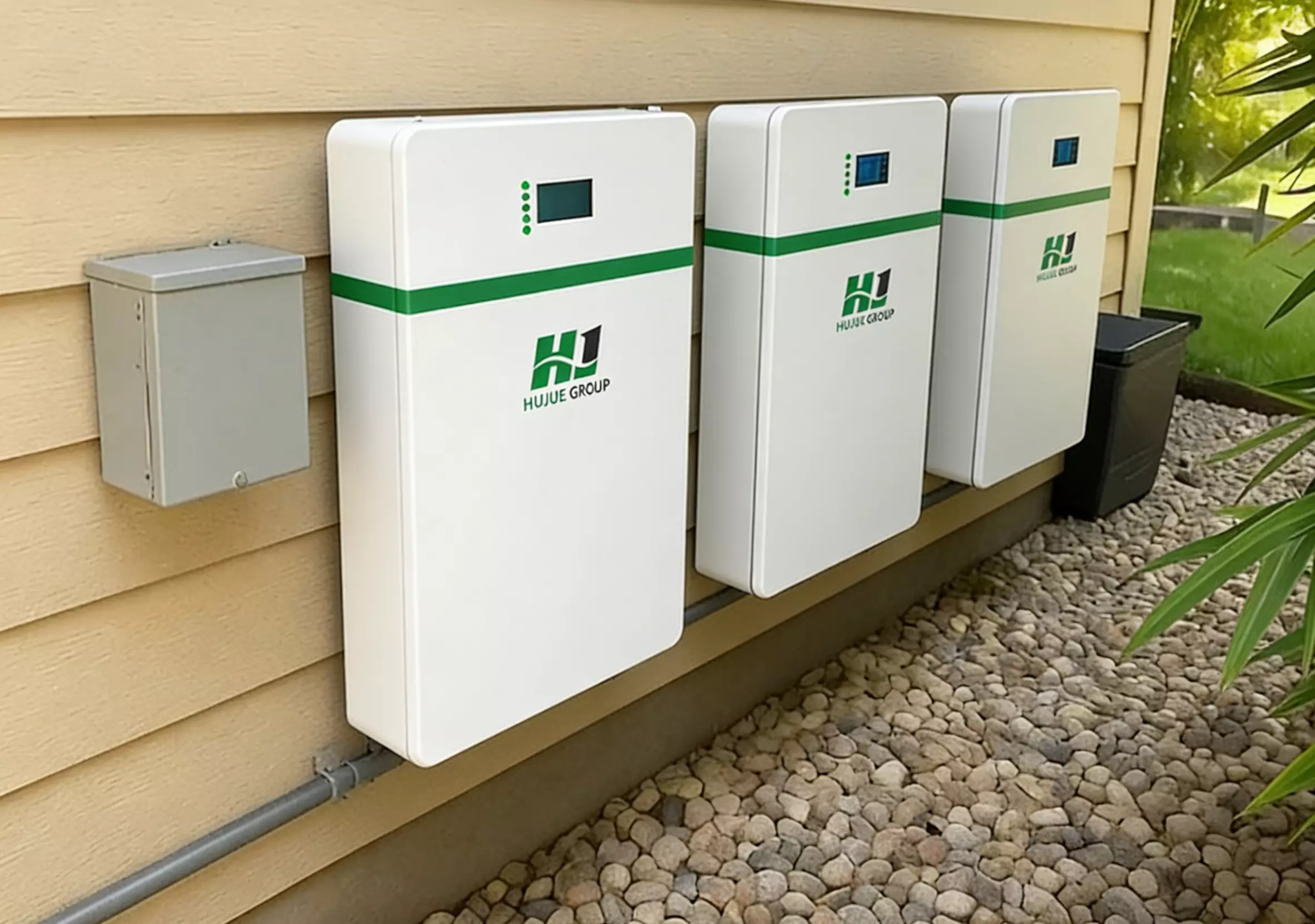
TOP 1: 48V LiFePO4 wall-mounted off-grid battery (recommended index: ★★★★★)
Highlights:
6000 cycles
Support 100% DOD
Self-contained intelligent BMS + WiFi monitoring
Wall-mounted to save space
Applicable scenarios:
Home off-line system
Cottage, farm
Emergency backup system
Advantages:
Stable, safe and long life
The lowest daily maintenance cost
Disadvantages:
The initial cost is slightly higher than that of AGM.
Cost-effective evaluation: ★★★★★ (the best choice to leave the network in 2025)
TOP 2: Stacked 5–20kWh modular LiFePO4 system
Highlights:
Modulated capacity expansion is more flexible
A set of replaceable traditional Powerwall
Powerful inverter compatibility
Applicable scenarios:
Medium-sized family
Electricity for farms
Solar energy hybrid off-grid
Advantages:
Easy to expand capacity and long service life
Disadvantages:
The footprint is slightly larger than that of the wall-mounted type.
TOP 3: 12V/24V Deep Cycle LiFePO4 Battery
Highlights:
Specially suitable for RVs and ships
Lightweight design
High-speed charging and releasing
Applicable scenarios:
RV trip
Off-network power supply for ships
Advantages:
Small, portable and highly stable
Disadvantages:
The monomer capacity is relatively small.
TOP 4: Portable lithium ion off-grid power supply
Highlights:
Integrated design
Plug in the solar panels and you can run off-grid.
Suitable for short-term off-network needs
Applicable:
Camp
Emergency standby power
TOP 5: AGM deep cycle battery (entry-level option with limited budget)
Highlights:
The initial investment is cheap.
Easy to buy
Applicable:
Small load system
It is not the best long-term plan to leave the network.
How to choose off-network batteries according to your needs?
1. RV (RV)
Recommendation: 12/24V LiFePO4 deep cycle battery
Recommended capacity: 2–5kWh
2. A remote cottage
Suggestion: 48V LiFePO4 + 5–15kWh
It can fully cover lighting, refrigerators and water pumps.
3. Ship power supply
Suggestion: Lightweight LiFePO4
Capacity: 2–8kWh
4. Farm / Orchard
Suggestion: 10–30kWh modular energy storage
5. Family hybrid off-network
Suggestion: Wall-mounted 10–20kWh system
(Can be connected in parallel to a larger capacity)
How long can the off-line battery last? How to extend life?
LiFePO4 battery life is usually up to 10–15 years.
Tips for prolonging life:
Don't let it go for a long time.
Maintain the appropriate temperature
Avoid 0–100% frequent limit charging and discharging
Regularly do balanced maintenance (some BMS is automatically executed)
Cost analysis: Which battery is the most cost-effective?
Battery Type Initial Cost Service Life Levelized Cost per kWh
LiFePO₄ Medium ★★★★★ Lowest
NMC High ★★★★ Medium
AGM Low ★★ Highest
LiFePO4 is the most cost-effective choice in 2025.
Trend Outlook for 2025–2030
Higher density LiFePO4
More intelligent cloud BMS
Standardization of modular home energy storage
The gradual commercialization of solid-state batteries
This means that the off-line system will be more secure, flexible and intelligent in the future.
Life off the Internet is not an adventure, but a new way of life.
The most important thing in determining the off-network experience is a reliable, safe and long-life battery.
If you are looking for an off-grid battery system suitable for families, RVs, cottages or farms,
The LiFePO4 wall-mounted or stacked energy storage system is definitely the most investment-worthy solution in 2025.