
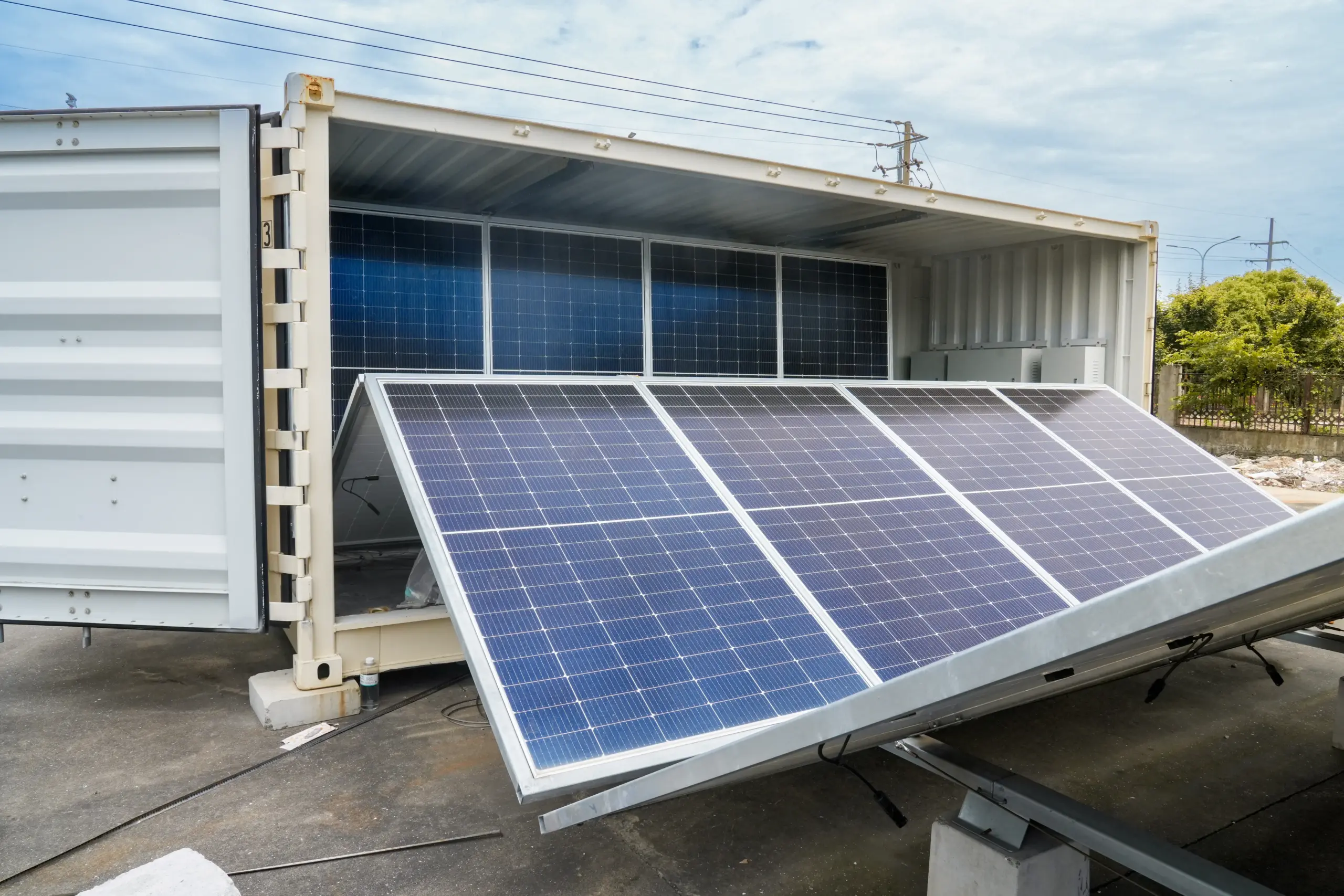
What is a solar kit for shipping container?
A solar kit for shipping container is a complete solar power system designed to provide a reliable energy solution. A standard shipping container can be converted into a mobile power station, off-grid office space, storage container, or modular data center with the correct design. We are a leading supplier of integrated solar container systems.
Our solar kits is specifically designed to match standard container sizes and weights. A standard solar kit for shipping container consists of:
- High-efficiency monocrystalline solar panels
- Aluminum or galvanized steel solar panel mounts
- Hybrid or off-grid inverters
- LiFePO4 battery systems
- DC combiner box
- Cables and connectors
- Optional monitoring system
Depending on the customer’s requirements, the system can be designed to provide anywhere from 3 kW to 100 kW or higher.
Why Use Solar Power for Shipping Containers?
Shipping containers can be used for the following purposes:
- Remote construction offices
- Mining and oil field operations
- Telecom base stations
- Agricultural irrigation control rooms
- Disaster relief shelters
- Mobile clinics or laboratories
However, in such cases, access to the main power grid is not possible. The use of diesel generators is common, but they have some disadvantages as well.
The advantages of using solar power for shipping containers include:
- Lower operating costs after the installation of the system
- Environmentally friendly
- Low maintenance
- Silent operation
- Scalability of the system
Key Design Considerations
The design of the solar kit for the shipping container requires more than the mere installation of solar panels on the roof of the shipping container.
1. Roof Load Capacity
The standard roof of the shipping container has limited capacity for static weights.
A reinforced solar panel installation system is highly recommended.
2. Energy Demand Calculation
Before selecting system size, determine:
- The daily energy demand (in kWh/day)
- The peak demand (in kW)
- The backup requirement (in hours)
Example:
| Application | Daily Consumption | Recommended Solar Size | Battery Capacity |
|---|---|---|---|
| Small Office Container | 10–15 kWh | 5 kW | 15–20 kWh |
| Telecom Station | 20–30 kWh | 8–10 kW | 30–40 kWh |
| Industrial Site | 50–80 kWh | 20–30 kW | 60–100 kWh |
3. Battery Type Selection
We focus on the LiFePO4 type of batteries due to the following:
- Longer cycle count (6000+)
- Safety ratings
- Temperature tolerance
- Depth of discharge
Solar Kit vs. Fully Integrated Solar Container
Option A: Complete Solar Container
- Pre-installed solar panels
- Pre-installed battery cabinet
- Pre-installed wiring system
- Pre-tested and pre-commissioned
- Ready to deploy out of the box
- Ideal for rapid deployment projects
Option B: Solar Kit for Existing Container
- Components shipped separately
- Customer installs on existing container
- Customizable capacity range
- Cost-effective transportation
- Ideal for projects with existing containers
Performance Data from Real Deployment
- 12 kW solar array
- 40 kWh LiFePO4 battery pack
- 15 kW hybrid inverter
12 months performance data:
| Metric | Result |
|---|---|
| Annual Solar Generation | 16,500 kWh |
| Diesel Generator Use | Reduced by 85% |
| Estimated Fuel Savings | 5,200 liters/year |
| CO₂ Emission Reduction | 13.9 tons/year |
The client initially expected partial generator reliance, but the solar kit handled most daily loads. The hybrid inverter automatically switched to backup only during prolonged cloudy periods.
Fixed vs. Foldable Solar Panel Systems
Not all solar kits for containers employ fixed solar panel systems on the roofs of the containers. Newer solar kits employ more advanced systems with foldable solar panel arrays.
Fixed Rooftop Mounting
- Lower cost
- Simple structure
- Limited expansion area
Foldable Array System
- Increased generation capacity
- Better panel angle optimization
- More complex mechanical structure
In areas with high solar irradiance levels, the solar panel capacity of the foldable array system may be increased by as much as 30-50%. However, the final choice of the solar panel system will largely depend on budgetary considerations.
Is a Solar Kit for Shipping Container Worth It?
The solar panel kits for shipping containers are definitely worth it for remote operations. However, there are certain considerations that must be taken into account.
- Hybrid systems must be employed if the shipping container is going to operate industrial machinery continuously.
- If daily usage is moderate, solar plus battery may fully replace diesel.
- Moblile foldable solar panel container may be more suitable if the shipping containers are frequently moved.
In conclusion, the solar panel kits for shipping containers represent a paradigm shift in the generation of renewable energy. We no longer have to worry about laying the necessary cabling. we now carry the entire power station with us.
A solar panel kit for shipping containers is an excellent innovation in the generation of renewable energy. A solar panel system for shipping containers may be purchased from LZY Energy or customized for your shipping containers.