
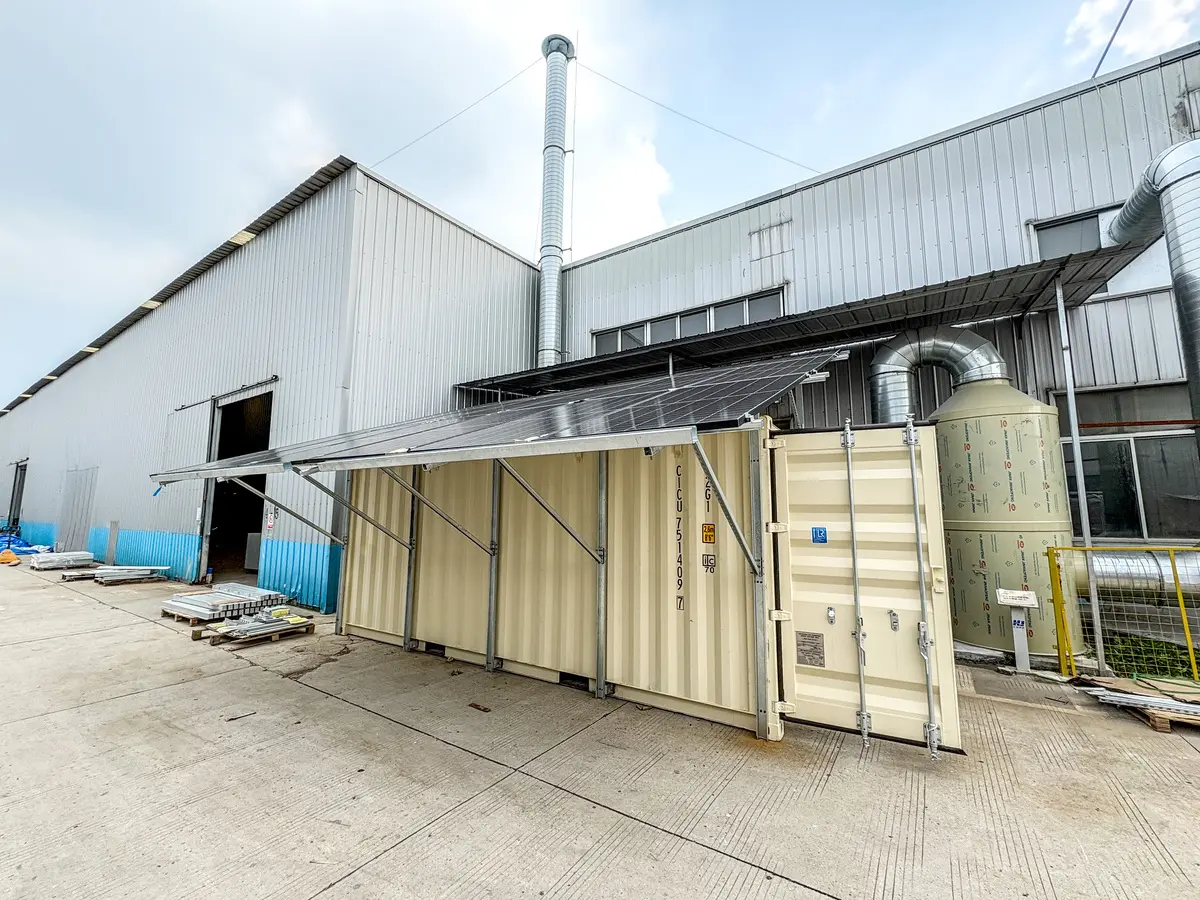
Yes, you can install solar power systems on existing shipping containers. Provided that the right approach is applied, it will be possible to turn an ordinary container into a mobile solar power plant.
Why Shipping Containers Are Perfect for Solar Power Units
A shipping container is not only a box made from steel but a very versatile object that works well for solar power generation systems.
The reason for such use lies in:
- Presence of flat surfaces that can be covered by solar panels
- Ability to bear additional weight thanks to a solid metal structure
- Portability because of their modular character
- Durability and weather resistance
Based on personal experience with container-based power plants, it is safe to say that the primary benefit consists in versatility. It means that the power plant can be moved if necessary.
Key Points to Consider Prior to Installation
It is possible to install solar panels on a shipping container, but it requires a number of technical considerations.
1. Structural Capacity
A standard 20-foot container roof was not made for weighty objects. In addition to the weight of the panels themselves, the structure will also have to account for wind.
Requirements may include:
- Reinforcement bars on the mounting frame
- Rearload rails on the roof
- Prior structural analysis before installation
2. Mounting Structure
There are mainly two methods used to mount solar panels:
- Fixed structures: The panels are mounted straight on the roof
- Foldable structure: The panels are mounted in a way that they can be unfolded
The foldable type of structure is more common in the installation of solar containers due to increased efficiency.
3. Electrification Process
Typically, a fully-functional solar panel system consists of:
- Solar panels
- Inverter
- Storage battery
- Charge controller
It is at this point when manufacturers like LZY Energy invest the bulk of their effort into building a system inside the container.
Typical System Configurations
Here’s a simplified comparison of common container-based solar setups:
| Container Size | Solar Capacity | Battery Storage | Typical Use Case |
|---|---|---|---|
| 10 ft | 1–3 kW | 5–10 kWh | Small off-grid cabins |
| 20 ft | 3–10 kW | 10–40 kWh | Construction sites, farms |
| 40 ft | 10–50 kW | 40–200 kWh | Industrial backup, microgrids |
These are general ranges, but they show how scalable the concept is.
Real-World Examples
Solar powered container solutions have been adopted across various industries.
1. Construction Site
The site is not always connected to the electric grid. The solar-powered container offers:
- Power to operate tools and lighting
- Cheaper fuel than diesel power generators
- Silent operation
2. Rural Areas
For rural areas or those that are not connected to the electric grid:
- They work like a self-contained power plant
- They can provide energy for homes or clinics
3. Emergency Situations and Disasters
Emergency situations need quick responses. Solar containers offer a fast way to bring back electricity.
Benefits Relative to Conventional Systems
Solar panel installation on buildings is typical; however, there are distinct advantages for using shipping containers.
Portability
The entire unit can be moved without needing to uninstall anything.
Plug-and-play solution
Most systems will arrive fully wired and tested
Easy to scale
Add capacity by adding another container
Quick installation
When compared with a roof or ground-based solar array
However, this is not always a better solution. When it comes to a permanent solution with large space, then a ground-based solar panel array might be cheaper.
What to Anticipate
No system can function without flaws. There are some downsides to using containers with solar panels.
- Insufficient roof area constrains panel power output
- Heat generation within the container could impact batteries
- Customization costs might initially exceed those of homemade solar systems
In terms of implementation, heat management is not given enough consideration. Adequate ventilation or fluid cooling (for batteries) is imperative.
Example Application
An application I was involved in saw the transformation of a 20ft box truck to a mobile solar power station for an agriculture farm.
System specifications were:
- 6kW solar panel (folding solar panel)
- 20kWh LiFePO4 battery
- Hybrid invertor system
In less than three months of operation, there was over a 70% reduction in diesel usage. Another advantage seen was the ability to add another truck in the future, which would be easier than with a stationary unit.
Retrofitting Your Old Containers
Yes, and here comes the exciting part.
Your old containers can now be retrofitted with:
- Solar panels mounted on the roof
- Battery storage racks inside
- Pre-wiring for electricity
But your old containers must first be checked for:
- Rusting or corrosion
- Deformed structures
- Roof damage
An ineffective structure may affect performance and safety.
Conclusion
Solar installations on shipping containers have been proven possible; in fact, it has become common practice to do so when creating portable energy sources. It is possible to make a shipping container a reliable power station by designing and equipping it properly.
Companies such as LZY Energy go even farther, providing complete solutions with generation, storage, and management capabilities incorporated into one shipping container.
The versatility and adaptability of such energy stations cannot be underestimated.