
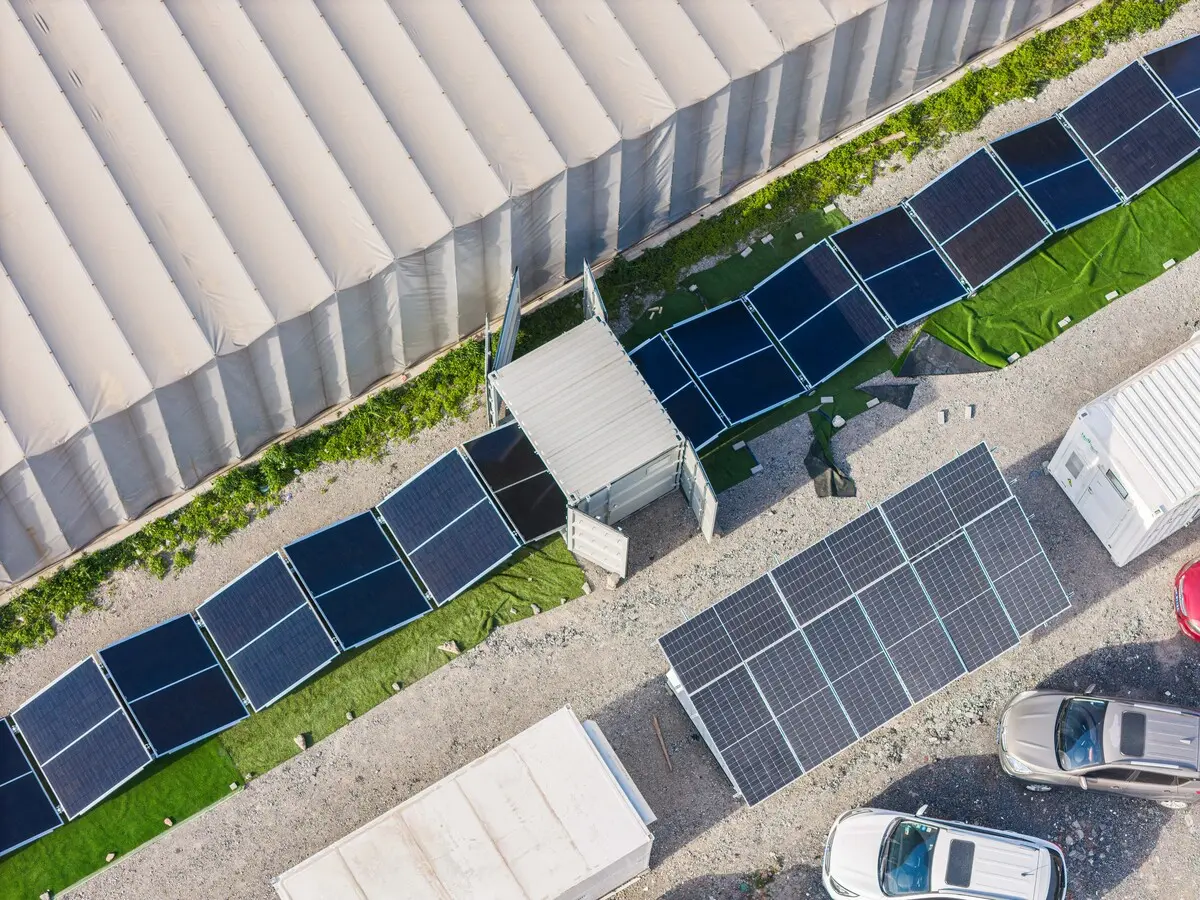
Reliable off grid and mobile power solutions are no longer experimental technologies. Rather, they are viable technologies used worldwide to provide power to areas not reached by the grid or to areas where mobility and speed are critical factors. From construction sites and disaster zones to mining sites and military bases, portable solar energy systems are becoming the preferred alternative to diesel generators.
Our approach at LZY Energy is mobile foldable solar container systems. This is because these systems are not only viable but also provide clean and reliable power after arriving on site. This makes them the preferred solution for remote sites.
What are Off Grid and Mobile Power Solutions?
Off grid and mobile power solutions are energy solutions that are able to provide power without the need for the traditional grid. Unlike other solar energy solutions, these are designed to be mobile and can be set up easily.
Most off grid and mobile power solutions use several components:
- Solar photovoltaic panels
- Batteries for storage (usually LiFePO4)
- Inverters and power management devices
- Mounting devices or mobile devices
If this is done in a containerized format, then the entire plant is easily transportable in a truck or a crane, and electricity can thus be transported to any place it is required.
Why Mobile Solar Containers Are Gaining Popularity
Traditional diesel-based generators are generally preferred in off-grid applications. Nevertheless, there are a number of challenges that are forcing many organizations to seek alternative mobile renewable power solutions.
Key Advantages
- Less dependency on fuel
- Quick and easy to deploy
- Less expensive to run
- Less environmental impact
- Design is scalable
A solar container is essentially a plug-and-play microgrid solution.
For instance, a mobile solar container is usually in a standard container format when it is being transported to a site. Once it is placed in a position, the solar panel automatically or manually folds out to a compact solar panel.
Typical Applications of Mobile Off Grid Power
Mobile solar container systems are particularly applicable in areas where grid infrastructure is not available or is unstable.
Applications of mobile solar container systems include:
- Construction sites
- Mining operations
- Oil and gas operations
- Disaster relief operations
- Military operations
- Agricultural operations
- Telecommunications
Case Example of Mobile Solar Container System
The following table indicates some of the typical specifications of a mid-sized mobile solar container system.
| Parameter | Typical Specification |
|---|---|
| Container Type | 20 ft Mobile Solar Container |
| Solar Capacity | 30–60 kW |
| Battery Storage | 120–250 kWh LiFePO4 |
| Deployment Time | 2–4 hours |
| Daily Energy Output | 120–300 kWh depending on sunlight |
| System Lifetime | 20+ years (solar modules) |
In practical applications, these systems can reduce the runtime of diesel generators by 60-90%. This is depending upon the solar availability.
How Foldable Solar Container Systems Work
The concept behind solar container systems is to maximize the output while minimizing the effort of deployment.
A normal system would operate through the following stages:
- Transport – The system is transported via normal transport means.
- Positioning – It is placed on a surface.
- Panel Deployment – Photovoltaic foldable panels deploy from the system.
- Energy Storage Activation – Integrated battery systems activate to store energy.
- Power Distribution – Inverters convert DC power from solar cells to AC power.
Because of pre-assembly at the factory, there is no need to install the system on-site. This reduces operational costs significantly.
The Role of Energy Storage in Mobile Power Systems
Solar power is not constant throughout the day and night. To solve this problem, battery energy storage systems play a critical role.
Most off-grid mobile power systems use LiFePO4 batteries. This is due to the following reasons:
- High cycle count – 6,000+ cycles
- Thermal stability
- Low maintenance
- High charging/discharging efficiencies
At LZY Energy, we have integrated energy storage directly into our mobile solar system design. This means that we have a self-contained system that is able to operate even when there is no sunlight.
Key Design Considerations for Off Grid Mobile Energy
When designing an off grid mobile energy solution, several factors need to be considered:
- Daily Power Consumption
- Peak Load Requirements
- Availability of Sunlight
- Autonomy Hours of the Battery
- Transport Logistics
For example, if the energy requirement for a mining site is 150 kWh, the configuration will be totally different compared to a telecommunications site, which requires only 10 kWh.
The flexibility of the system will be critical, and the advantage with containerized solar solutions will be the ability to deploy more containers depending on the energy requirements.
The Future of Mobile Renewable Power
The global demand for off grid and mobile power solutions is growing rapidly, and many industries are looking for alternative and reliable energy solutions.
Several trends are defining the future of the industry:
- Hybrid microgrids with solar, battery, and diesel components
- Automated panel deployment systems
- Smart energy management software integration with the system
- Advances in lithium-ion battery technology
The solar containers are an important milestone towards the development of efficient and deployable renewable energy infrastructure, and instead of building permanent infrastructure in remote locations, the energy can be moved to the location of requirement.
From a technical perspective, the most exciting aspect of the solar containers and the technology is the flexibility and the fact that the energy does not need to be fixed at one point. The energy can be moved, and with the solar containers, the energy can be moved to the point of requirement, making the energy portable.