
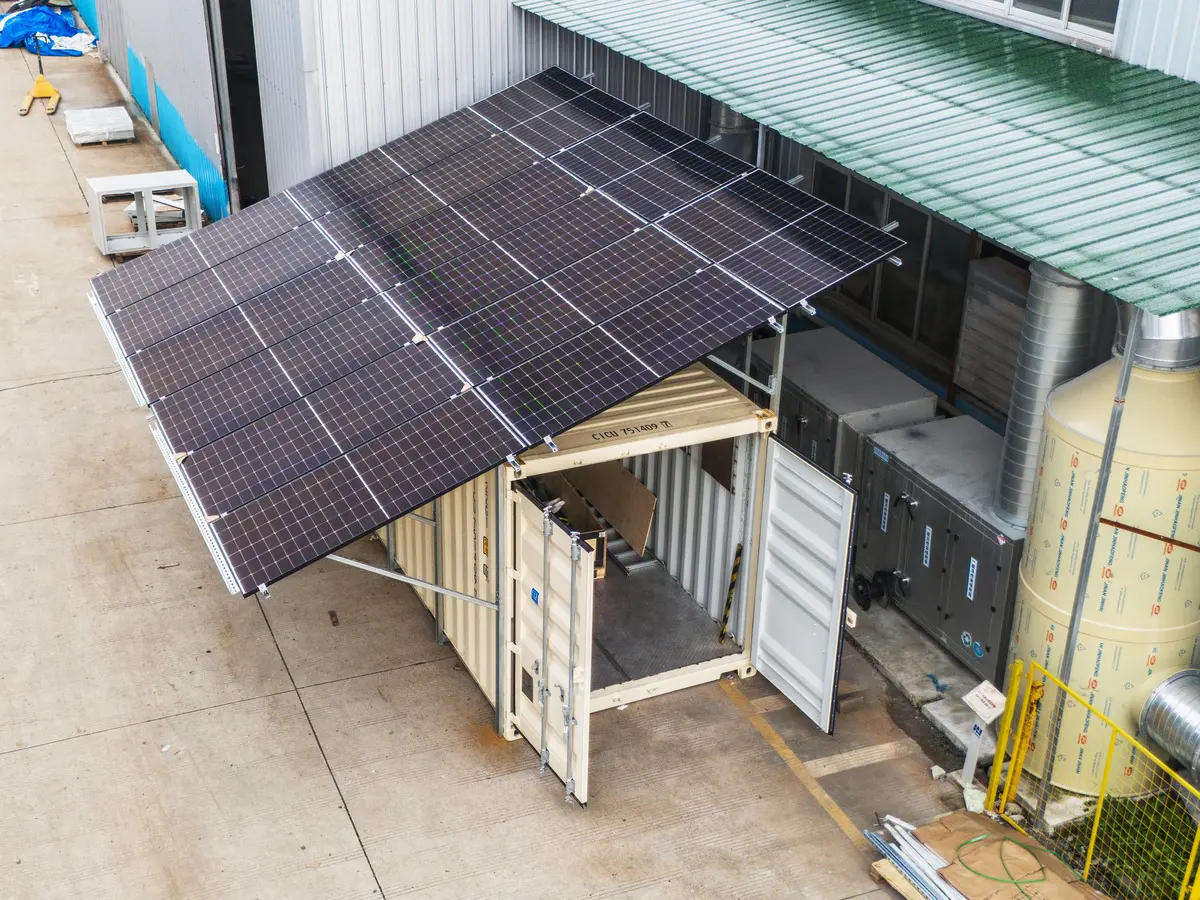
Hybrid solar container power systems are modular and containerized energy systems that combine solar photovoltaics, battery energy storage, and other power sources, such as diesel generators or grid power, in a single, transportable package. They are intended for areas where the electricity supply is weak, expensive, or unavailable at all.
What Makes a Solar Container a Hybrid Solar Container Power System?
Unlike conventional solar containers, which are based only on solar photovoltaics and battery energy storage, a hybrid solar container power system combines several energy sources and sophisticated control techniques.
The basic components of a hybrid solar container power system are as follows:
- Solar photovoltaics (roof-mounted, foldable, or external solar arrays)
- Battery energy storage system based on lithium iron phosphate chemistry
- Power conversion system (PCS) or hybrid inverter
- Optional diesel generator or grid power supply
- Intelligent energy management system
The system will automatically use the most efficient source of power, based on load demand, battery state of charge, and solar availability. Simply put, it will use solar, then batteries, and finally backup power as a last resort.
At LZY Energy, our hybrid solar container power systems have been designed with this very same priority and logic to reduce fuel consumption and ensure continuous power.
Common Questions Users Ask (and Honest Answers)
Is a hybrid system really necessary?
Yes, if power continuity is a requirement. Solar systems can have a long downtime during adverse weather. A hybrid will bridge this gap without completely relying on fossil fuels.
How complex is installation?
Far less complex than a traditional power plant. Most of our systems are assembled and tested before leaving the factory. Installation is as simple as placing the container and connecting it to your load or solar array.
What about maintenance?
Solar and battery systems require very little maintenance. If a generator is used, it’s just like any other generator. A hybrid solar container power system has less maintenance than a generator-only solution.
Are they scalable?
Yes, they are. Multiple containers can be used together to power a small or very large temporary power requirement.
Key Applications for the Growing Market
Hybrid solar container power systems serve various markets, including the following:
- Mining and Oil & Gas Operations: Reliable off-grid power with minimal fuel supply issues
- Construction Operations: Access to temporary yet stable power
- Remote Communities and Island Nations: Reduced energy costs with increased energy security
- Disaster Response Operations: Easy to deploy with independence from fuel supply
- Military Operations: Quiet operation with minimal thermal signature
From experience, projects that were initially intended to utilize only diesel fuel often change to hybrid solutions after evaluating fuel costs and associated supply issues.
Performance Snapshot: A Typical Solution Example
The following is an example of the performance of a typical system based on the configuration of the mid-size LZY Energy solution:
| Parameter | Value |
|---|---|
| Container Size | 20 ft ISO |
| Solar Capacity | 80–120 kWp |
| Battery Type | LiFePO4 |
| Battery Capacity | 200–400 kWh |
| Backup Generator | 50–100 kVA |
| Daily Fuel Savings | Up to 60–70% vs diesel-only |
| Deployment Time | 1–3 days |
Actual performance will vary depending on the conditions, yet the fuel savings will far exceed initial project expectations.
Why LiFePO4 Batteries Matter
Battery chemistry is an important factor for battery buyers, and many are not aware of its impact on the long-term performance of their hybrid solar container power systems. LZY Energy exclusively uses LiFePO4 (LFP) batteries for all of its hybrid solar container power systems because of their long cycle life, excellent thermal stability, and superior safety over NMC batteries, as well as their lower cost of ownership over time.
Industry Trends Worth Watching
There are a number of trends that are shaping the future of hybrid solar container power systems, including:
Smarter Energy Management
More and more, artificial intelligence-driven Energy Management Systems are helping hybrid solar container power systems run more efficiently.
Higher Energy Density Containers
Advances in battery packaging are allowing for greater capacity without increasing the size of the container.
Carbon Reduction Pressure
More and more industries are facing severe carbon reduction targets, and hybrid solar container power systems are an important solution for meeting these goals.
Hybrid-by-Default Project Designs
More and more, hybrid solar container power systems are being designed as hybrids right out of the gate.
From an industry perspective, the biggest change is the shift in the way people think about hybrid solar container power systems. They are no longer viewed as "backup power solutions," but rather as primary power solutions.
A Practical Takeaway from the Field
There are many lessons learned when working on hybrid solar container power systems, and one of the biggest takeaways is the importance of load profiling over capacity. Many sites are seeing the benefit of taking the time to understand their load requirements and seeing the benefits of hybrid solar container power systems.
LZY Energy often adjusts the solar/battery ratio of its hybrid solar container power systems after load profiling and seeing the actual load requirements of the end user.
Hybrid solar container power systems are the nexus of flexibility, reliability, and sustainability, and as the world becomes an increasingly expensive and unreliable place, the role of hybrid solar container power systems will become even more important for those that need power anywhere, anytime.