
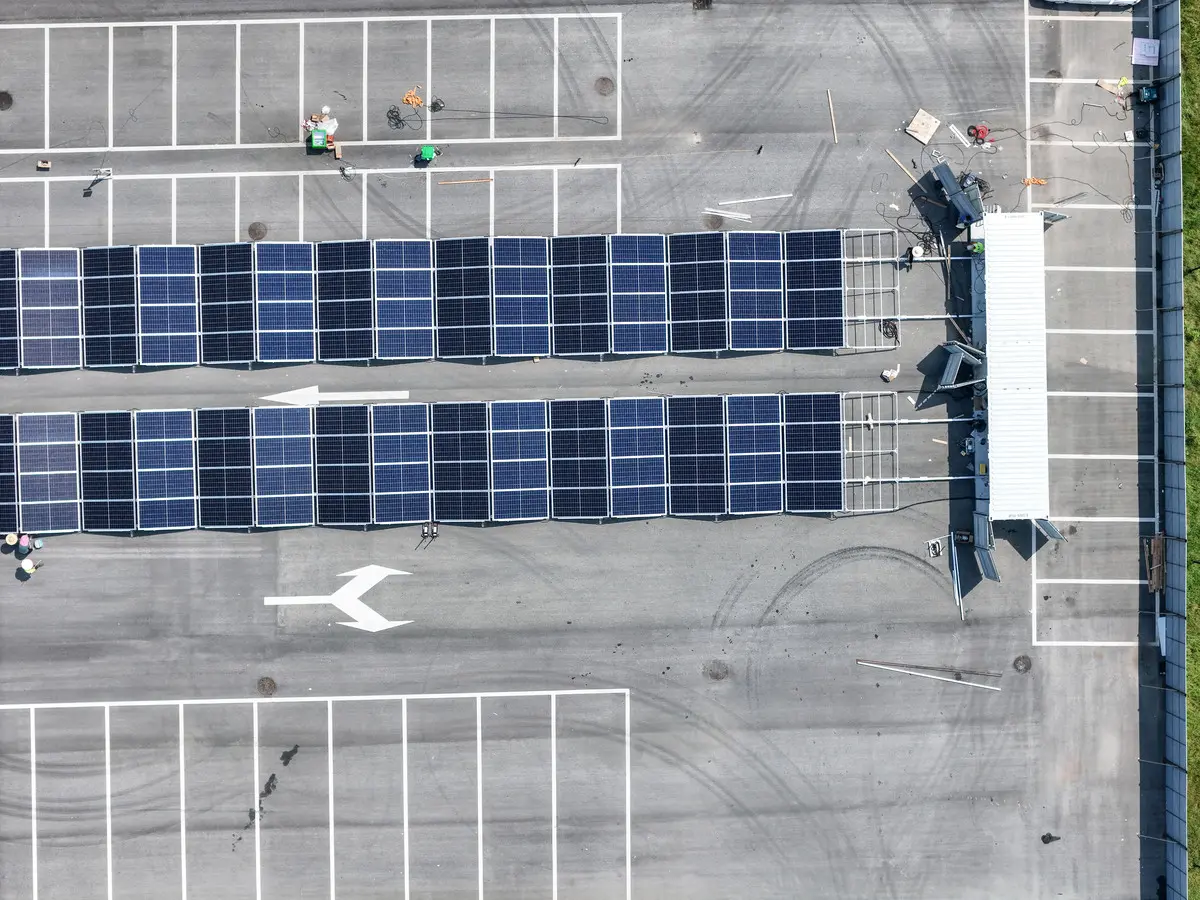
Foldable solar panel containers provide a highly adaptable, portable, and efficient method for producing solar energy wherever it’s needed. Their key benefit is the combination of large-scale photovoltaic power generation with the mobility of a standard shipping container, making them perfect for temporary setups, remote locations, or situations with rapidly changing energy requirements.
Below, we’ll explore why this solution is gaining popularity, how it is applied in real-world projects, and the future direction of the technology.
What Are Foldable Solar Panel Containers?
A foldable solar panel container is usually built around a 10ft, 20ft, or 40ft shipping container. Photovoltaic panels are installed both inside and on top of the container, designed to fold for transport and unfold when on site. Once set up, the container functions as a compact solar power station.
Most systems include:
- High-efficiency solar panels
- Mounting and folding mechanisms
- Inverters and electrical protection equipment
- Optional battery energy storage systems
This setup enables rapid scaling of solar power capacity without the need for permanent infrastructure.
Key Benefits of Foldable Solar Panel Containers
1. Fast Setup and Portability
A major advantage is their quick deployment. These systems can be moved using standard logistics and set up within hours instead of weeks.
Highlights include:
- No need for foundations or construction work
- Easy to move to different locations
- Perfect for emergencies or temporary projects
- This means power can be quickly provided to disaster zones, construction areas, or remote communities with minimal preparation.
2. Efficient Use of Space and High Energy Output
Foldable solar containers optimize energy production per square meter. Panels are compactly stored during transport and unfolded on-site to cover a much larger area.
Compared to traditional ground-mounted setups:
- They require much less land
- Panels are pre-set at optimal angles
- Installation mistakes are minimized
- This makes them especially useful where land is scarce or regulated.
3. Reduced Installation and Labor Expenses
Since the system is pre-designed and assembled in the factory, less labor is needed on-site.
Typical savings include:
- Fewer skilled workers required
- Faster installation times
- Lower risks during commissioning
From experience with containerized solar projects, cutting down coordination efforts alone can save several days, especially in remote areas with limited skilled labor.
4. Scalability and Modular Design
Foldable solar panel containers are naturally modular. Multiple units can be linked in parallel to boost capacity.
This enables users to:
- Begin with a small setup and expand later
- Align power output with actual demand
- Avoid large initial investments
For instance, one container might provide 20–50 kW, while a group of containers can power microgrids of several hundred kilowatts.
5. Enhanced Protection and Longevity
During transport, the solar panels are securely enclosed within the container, greatly lowering the risk of damage compared to shipping loose panels.
Additional durability benefits include:
- Weatherproof container shells
- Less wind exposure during transit
- Longer panel life due to careful handling
This is particularly important for international shipping or deployments in rough terrain.
Real-World Application Examples
Common Use Cases
Foldable solar panel containers are frequently utilized in:
- Mining and oil & gas exploration sites
- Military and defense operations
- Disaster relief and humanitarian aid
- Remote industrial facilities
- Temporary events and exhibitions
Example Capacity Comparison
| Application Scenario | Container Size | Solar Capacity | Deployment Time |
|---|---|---|---|
| Construction Site Power | 20ft | 30 kW | < 1 day |
| Remote Village Microgrid | 40ft | 80–120 kW | 1–2 days |
| Emergency Relief Camp | 10ft | 15–20 kW | Few hours |
These numbers can vary based on panel efficiency and folding design but provide a practical sense of the technology’s scale.
Integration with Energy Storage Systems
Although foldable solar containers can function independently as power generators, their true advantage is realized when combined with battery storage.
Typical benefits of integrating solar with storage include:
- Consistent power supply during nighttime or cloudy conditions
- Decreased dependence on diesel generators
- Lower fuel consumption and maintenance expenses
LiFePO4 battery systems are commonly favored because of their safety, long lifespan, and thermal stability, especially in containerized setups.
Future Trends and Development Outlook
Looking forward, several trends are influencing the advancement of foldable solar panel containers:
- Higher-efficiency modules: Emerging cell technologies will boost output without increasing container dimensions.
- Smarter control systems: AI-driven energy management will automatically optimize power generation and storage.
- Hybrid configurations: Combining with wind, diesel, or grid connections to enhance reliability.
- Standardization: More uniform designs will cut costs and improve compatibility.
As global demand for portable and low-carbon energy solutions rises, foldable solar containers are expected to become a mainstream option rather than a niche product.
Final Thoughts from Practical Experience
In real-world deployments, the value of foldable solar panel containers extends beyond technical aspects—it’s operational. They simplify logistics, reduce uncertainties, and deliver reliable performance. For projects where speed, flexibility, and dependability are crucial, this solution often surpasses traditional solar installations.
As the technology continues to evolve, its benefits will become even more significant, particularly in regions aiming for rapid energy transitions without extensive infrastructure development.