
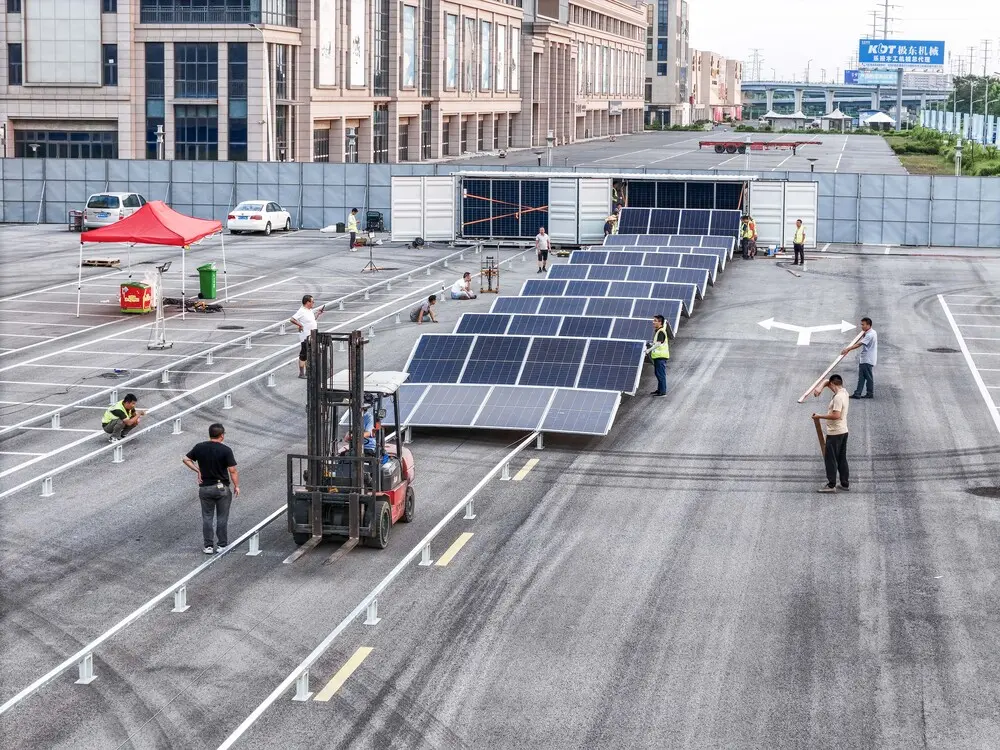
A growing number of businesses, communities, and remote project operators are searching for flexible power solutions. Among all options available today, the mobile solar plant stands out for its convenience, scalability, and cost-effective operation. If you’ve been considering whether a mobile solar plant is right for your work site or project, this article breaks down everything you need to know.
What is a mobile solar plant?
A mobile solar plant is a portable solar power system that integrates solar panels, inverters, batteries, and a structural frame (often a container or trailer) so it can be transported and deployed quickly. Unlike traditional ground-mounted solar farms, a mobile solar plant requires minimal civil work. It unfolds or extends, generates power immediately, and can be relocated as project demands change.
Most modern units are designed for:
- Remote construction sites
- Emergency response
- Off-grid communities
- Disaster-relief operations
- Military bases
- Temporary events
In simple terms, it delivers clean power wherever it’s needed without relying on diesel generators.
Why Mobile Solar Plants Are Growing in Demand
Several factors are driving the rapid adoption of mobile solar plants:
1. Mobility and Fast Deployment
Traditional solar farms require land preparation, fixed mounting structures, and lengthy installation procedures. A mobile solar plant, by contrast, is often delivered as a preassembled container that unfolds in minutes. From my experience with energy projects in Southeast Asia, transportable units significantly cut project timelines and allow teams to relocate the system as conditions change.
2. Decrease Long-term Costs
Solar energy reduces fuel and maintenance costs associated with diesel generators. A mobile solar plant is especially advantageous in remote regions where fuel transportation adds a heavy expense.
3. Reduced Environmental Impact
These systems operate silently and emit no pollutants. They are ideal for areas where environmental regulations or community expectations require cleaner solutions.
4. High Compatibility With Battery Storage
Most systems integrate LiFePO4 battery packs, allowing operators to use solar energy even at night. Companies like LZY Energy offer mobile folding solar container systems designed specifically for users seeking “mobile solar plant” solutions.
Key Components of a Solar Mobile Plant
Though the specific designs vary, common among most mobile solar plants are:
- Foldable or slat-type solar arrays
- MPPT solar charge controllers
- Hybrid or off-grid inverter systems
- Battery energy storage-LiFePO4 commonly used
- Steel container or trailer platform
- Optional diesel backup generator
The compact architecture allows easy transportation by truck, ship, or even helicopter in the case of emergency missions.
Typical System Configurations
Below is a simplified table showing typical capacities found in commercial mobile solar plants. The values may change from one manufacturer to another, but the ranges help users get a practical understanding.
| System Type | Solar Capacity | Battery Capacity | Deployment Time | Ideal Applications |
|---|---|---|---|---|
| Compact Mobile Unit | 10–20 kW | 20–50 kWh | < 20 minutes | Telecom stations, small communities |
| Medium Container System | 30–60 kW | 60–150 kWh | < 1 hour | Construction sites, mining camps |
| Large Folding Solar Plant | 80–150 kW | 150–300 kWh | 1–2 hours | Military bases, disaster recovery, microgrids |
From a practical perspective, the medium container system is usually the most common because it generally allows for a balance between portability and power output.
Where Mobile Solar Plants Make the Most Sense
Mobile solar plants bring strong value in scenarios where traditional infrastructure is expensive or impossible to build. Consider the following common use cases:
1. Construction and Mining Projects
These sites often move as the work progresses. The mobile solar plant keeps power available with no concerns for constant diesel deliveries.
2. Disaster Relief and Humanitarian Aid
Mobile solar units restore electricity faster than rebuilding damaged grid infrastructure.
3. Isolated villages and islands
Mobile solar systems provide a steady energy base in countries with little or no power grid until permanent systems can be installed.
4. Temporary and Seasonal Events
Festivals, field research centers, and temporary military operations are some applications that benefit from silent, clean power.
Future Trends: Where Mobile Solar Plants Are Headed
The market is changing fast. Different trends are pointing toward building the next generation of mobile solar power:
- More compact folding designs for easier transportation
- Higher efficiency monocrystalline panels to increase power density
- Advanced lithium or solid-state batteries offering longer lifespan
- Hybrid systems with EV-charging functions
- AI-driven energy management software for efficient charging and load distribution.
Judging from industry data and based on my conversations with project managers in Africa and South America, demand for mobile solar plants will expand during the next decade, as governments are pushing for cleaner, decentralized power.
A Practical Example: Mobile Folding Solar Containers
Companies like LZY Energy have developed mobile folding solar container products. These units integrate solar modules, inverters, and LiFePO4 batteries into one transportable container. The key benefit is that the solar arrays fold out automatically, and therefore, become accessible even for teams with limited technical experience. While this is just one example, it serves to help illustrate ways in which industry is simplifying the deployment of clean energy.
Is a Mobile Solar Plant Right for You?
If you are in need of quick, reliable, off-grid power without a long-term commitment to the infrastructure, then yes is likely the answer. A mobile solar plant is not meant to replace big solar farms, but it fills a critical gap where flexibility, mobility, and speed do matter most.