
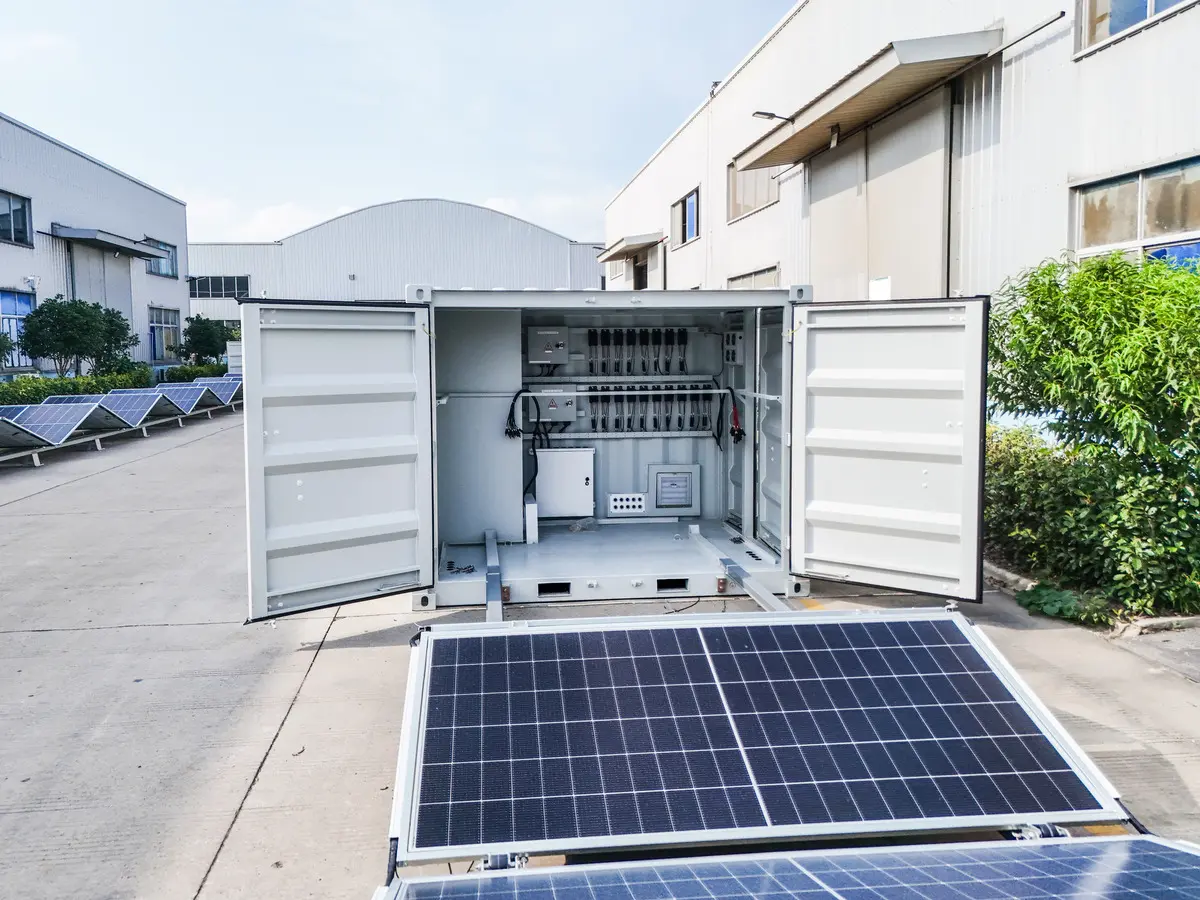
A microgrid in a box is an energy solution comprising a modular power plant with generation, battery storage, power conversion, and advanced controls combined in one portable package. It can deliver energy to remote facilities, industrial sites, and emergency operations either independent or connected to the utility grid. Using renewable energy sources along with battery storage and optional generators increases reliability of energy delivery and lowers fuel consumption.
How Does the Microgrid in a Box Work?
There are several energy sources combined into one coordinated system depending on particular application. The equipment may be located in a container, an outdoor cabinet or even a series of interconnected modules depending on a particular situation.
Major components of a microgrid include:
- Power Generation: solar photovoltaic panels, wind turbines, diesel generators or some other energy sources available on-site;
- Battery Energy Storage: storing excess energy and delivering power in case of insufficient generation of renewable energy sources;
- Power Conversion System: inverters that convert energy into desired voltage and frequency;
- Energy Management System (EMS): monitoring generation, charging of battery storage and electricity demand to optimize energy distribution;
- Protection and Distribution Equipment: switchgear, circuit breakers and other equipment protecting energy sources and managing electrical connections.
In case of a typical solar-plus-storage system, solar panels generate energy and distribute it to loads during daytime. The excess generation charges battery and delivers energy at night-time or when generation is insufficient. In case solar panels and battery do not have enough energy to cover all electricity demand, backup generators are used to provide the rest of energy when supported by a particular system.
Key benefits of a microgrid in a box
1. Fast Deployment
Traditional infrastructure for energy delivery usually includes complex preparation of the site, installation of equipment and connection to electrical networks. A microgrid in a box simplifies this process by providing major equipment pre-integrated in one modular system.
It can be transported, installed and put into service once the site preparation is completed. The exact time of deployment depends on system complexity, permissions, grid connection, etc.
2. Better Energy Delivery Reliability
A well-designed microgrid system can ensure delivery of energy to connected loads even in case of outage of the utility network. This requires proper system design including islanding controls, energy sources and protection equipment.
Moreover, battery storage can stabilize short-term energy generation from renewable sources and energy demand variations. In case there are high costs related to any kind of downtime, this increased reliability of energy delivery is especially beneficial.
3. Lowered Fuel Consumption
In case of remote facilities, diesel generators usually become the only source of energy. But this option requires a lot of expenditures for delivery of fuel, generator maintenance and continuous operation.
A hybrid microgrid allows using energy generated from renewable sources when they are available and storing the excess energy in battery storage. Then, generator works only when needed, rather than covering all load during a whole day.
The actual savings in fuel depend on energy availability, battery capacity, load profiles and generator operation strategy.
4. Expandable System
As a project develops, there are always chances to change the demand in energy and increase it. A modular system can be expanded and designed with possibility to add new battery capacity, generation and conversion equipment if necessary.
Nevertheless, expansion is not always as easy as adding one more module. Electrical compatibility, controls coordination, available space and overall system capacity have to be assessed before.
Applications
There are many applications where it is hard or expensive to have a proper infrastructure of energy delivery.
Remote Industrial Sites
Mineries, construction camps, agriculture facilities may be situated far from the utility network. Such a self-sufficient energy system can generate local electricity without need to install complex power grids.
Telecommunication Base Stations
Such sites need constant energy supply to provide operation of radio gear, transmission system, cooling and monitoring. Hybrid system with solar panels, battery storage and backup generator will lower the use of diesel fuel but preserve the availability of energy.
Also, in case of operators who have many remote stations, standardization of energy systems will help to install, maintain and manage them.
Emergency Response and Disaster Relief
After hurricanes, floods, earthquakes or other disasters, traditional power infrastructure may be damaged or unavailable. Portable energy systems can provide energy supply for emergency communications, hospitals, shelters and other crucial services.
Commercial and Industrial Facilities
Factories, warehouses and commercial buildings can use microgrids for increasing backup capabilities, introducing renewable energy generation and management of electricity costs. In case tariffs on energy use vary during a day, batteries can be used for arbitraging or peak-shaving of energy depending on tariffs and operating conditions.
Microgrid in a Box vs. Traditional Power Systems
| Feature | Microgrid in a Box | Traditional Power System |
|---|---|---|
| Installation | Prefabricated and modular | Often requires more on-site integration |
| Mobility | Can be relocated if designed for transport | Usually fixed in place |
| Energy sources | Can combine renewables, batteries, and generators | Depends on the original system design |
| Expansion | Modular expansion may be possible | May require major infrastructure changes |
| Grid independence | Possible with suitable controls and generation | Depends on system configuration |
A microgrid in a box is not an alternative that completely replaces the traditional infrastructure. On the contrary, it provides an alternative when flexibility, mobility and reliability are essential. Large facilities can use several such systems as a part of a larger microgrid.
How to Choose the Proper System
Selection of the right configuration starts with the understanding of energy requirements and conditions.
- Calculate the electrical load. It is required to determine peak power demand in kW, daily energy demand in kWh and equipment with high start-up current.
- Determine the requirements for back-up system. Battery capacity should depend on the period of operation of critical loads without generation from solar panels or any other energy source.
- Estimate the resources available. Local weather conditions, irradiation and wind conditions affect amount of energy from renewable sources that can be generated.
- Select the power configuration. Off-grid and grid-connected system require different approaches to designing. The presence of backup generators depends on the variability of renewable resources and necessity in uninterrupted power delivery.
- Estimate environmental conditions. Temperature, humidity, dust, corrosion and transport restrictions have to be taken into account in case of proper design of enclosures and cooling of the equipment.
- Estimate long-term operational costs. Initial investment has to be compared with the fuel consumption, maintenance, batteries replacement and service life of the equipment.
An important nuance is that battery power and energy are not the same parameters. The first one means maximum power that the system can deliver during any time, while the second one defines amount of energy that can be stored. Both have to be adjusted to the real requirements.
Microgrid solutions from LZY Energy
LZY Energy provides energy storage solutions and integrated power systems that allow delivery of flexible and reliable electricity. For remote industrial facilities, telecommunication stations and temporary projects, combination of battery storage, solar generation and optional backup power allows reducing dependency on traditional fuel-based energy sources.
Optimal configuration depends on energy demand, available renewable energy sources, necessary back-up duration and installation conditions. Project developers have to consider the whole system – battery capacity, power conversion, energy management and electrical protection instead of choosing equipment according to the size of the container.
Conclusion
A microgrid in a box is a combination of energy generation, battery storage and controls into one modular system allowing delivery of electricity where there are limitations in the traditional infrastructure. Main benefits of this system include fast deployment, better energy reliability, lowered fuel consumption and expandability.
For companies that operate remote facilities or need more reliable power supply, the key thing is to choose the proper configuration considering the energy requirements and local energy conditions. Proper design and integration make a microgrid in a box a good solution for energy delivery.