
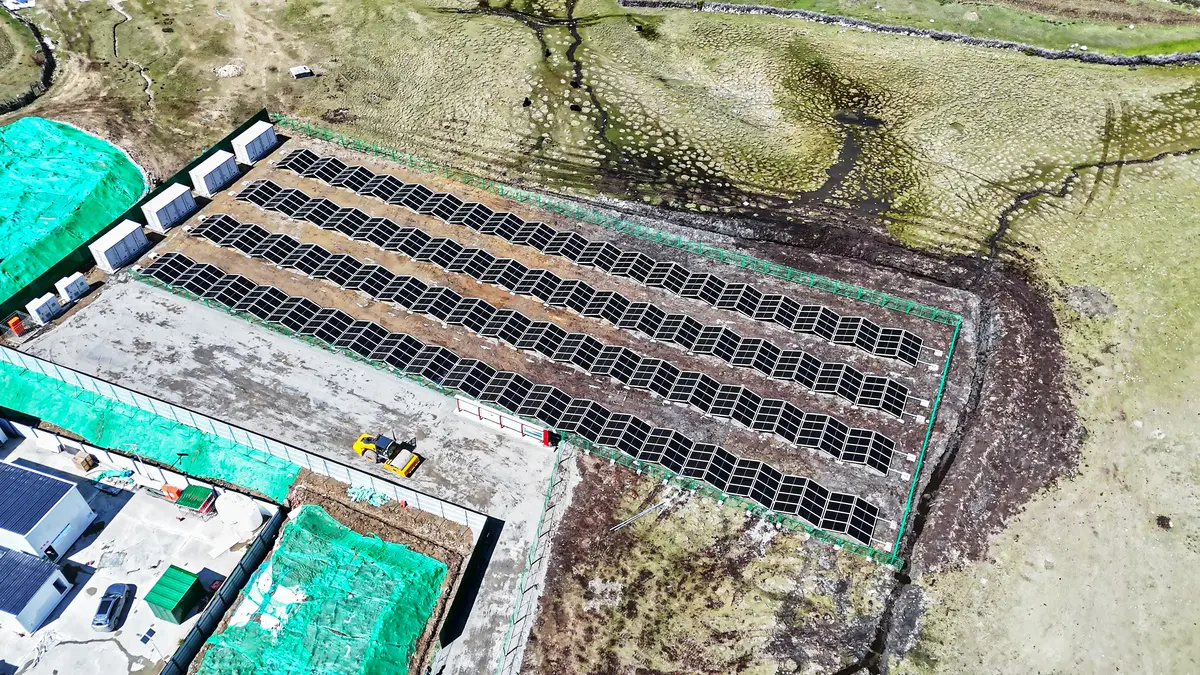
Containerized solar is a portable solar power solution that integrates photovoltaic generation and supporting electrical equipment into a transportable container structure. Depending on the system design, it can also include battery storage, inverters, energy management systems, and backup generators. This makes it suitable for locations where permanent solar installations are difficult, too slow to build, or not practical.
Unlike a conventional ground-mounted solar plant, a containerized solar system is designed around mobility, fast deployment, and modularity. It can be transported to a site, deployed, connected to the local electrical system, and later moved when the power demand changes.
What Is a Containerized Solar System?
In simple words, a containerized solar system is a ready-made solar power station which is put in a container.
Depending on the configuration, it may include:
- photovoltaic panels
- solar inverters or hybrid inverters
- energy storage system
- battery and energy management systems
- AC and DC distribution systems
- monitoring and control systems
- diesel generator
- foldable or deployable photovoltaic system
There are two types of solar container system configurations. In the first case, the container is just used as a housing for equipment. In the second one, the solar panels are folded and placed in the container during transportation and unfolded and deployed at the project site. The latter configuration allows using larger area for generating electricity without bulky structure being needed during transportation.
How Does Containerized Solar Work?
Operating principles of the containerized solar system are quite similar to a conventional photovoltaic system.
During the day, the solar panels convert the sunlight into direct current which then is converted into AC by the inverter and used to power the connected loads. If there is battery storage, excess solar energy can be saved there for further use.
Typical operation cycle of the containerized solar system is the following:
- solar panels generate electricity
- solar energy powers the loads of the site
- extra energy goes to the battery
- the battery powers the loads if there is not enough solar energy
- additional power can come from the grid connection or diesel generator
Hybrid configuration is very convenient for remote sites as it allows using solar energy as the primary source and decrease dependence on diesel fuel.
Why Use Containerized Solar?
The main advantage of containerized solar systems is their flexibility. Traditional solar power plant includes foundations, mounting system, electrical construction and installation and other works that need to be done on site. A lot of this works is pre-assembled in the factory in case of containerized solar system.
Main advantages are:
- fast deployment
- easy transportation
- decreased construction on the site
- scalable power
- solar plus storage option
Where Is Containerized Solar Used?
Containerized solar system is the best choice for temporary, remote and mobile power generation projects.
Typical applications are:
- remote construction site
- mining industry
- telecommunication industry
- temporary camps
- agriculture
- emergency and disaster response
- rural electrification
- events and temporary projects
- off-grid industrial projects
For example, containerized solar system can provide renewable power for the base stations of the telecommunication industry where grid electricity is unavailable or unreliable. When combined with battery energy storage and backup generator it can create hybrid energy site system which will operate constantly.
Containerized Solar vs. Conventional Solar
The main difference between containerized and conventional solar system is not the technology itself but the way the system is deployed.
Traditional solar power plant is designed for long-term operation and its solar panels, foundations, cables and other electrical equipment are fixed at one place.
Containerized solar system puts an emphasis on:
- mobility
- rapid deployment
- factory integration
- compact transportation
- flexible deployment
- temporarily and changing power requirements
For the permanent project with enough land and accessible construction it may be better to choose a conventional solar power plant. But for the temporary or remote project mobility becomes a huge advantage.
What Should You Consider Before Purchasing?
Not all the containerized solar systems are equally good for each project. The system has to be designed depending on your electrical load and environment.
Main aspects are:
- power demand: you have to calculate the continuous and peak loads in order to select the capacity of photovoltaic system;
- energy requirements: calculate the amount of energy that is needed both during day and at night;
- capacity of the battery: the energy storage should match the required backup duration and operation strategy;
- solar resources: local conditions such as sunlight, temperature, shadow and seasonal variations influence the generation;
- deployment space: for the foldable PV systems it may be necessary to have enough free space after unfolding the system;
- transportation: take into account the dimensions and weight of the container and lifting points;
- environmental conditions: dust, humidity, high temperatures, salt water and other environmental factors may affect the equipment selection.
From the technical point of view, I recommend to start with the load profile rather than select the container dimensions first. The container is just a platform and the power demand defines the real system configuration.
LZY Energy Containerized Solar Solutions
LZY Energy creates mobile and containerized solar solutions for those projects where conventional solar plants are hard to deploy. Mobile solar container systems are capable of combining photovoltaic generation, battery energy storage, power conversion and control systems into the transportable configuration.
In case of the project where temporary power generation, remote energy supply or the combination of solar energy and energy storage is required, the containerized solution may be a more flexible alternative to traditional solar power plant.
The correct configuration depends on PV capacity, battery capacity, load profile, deployment environment and availability of grid or diesel backup.