
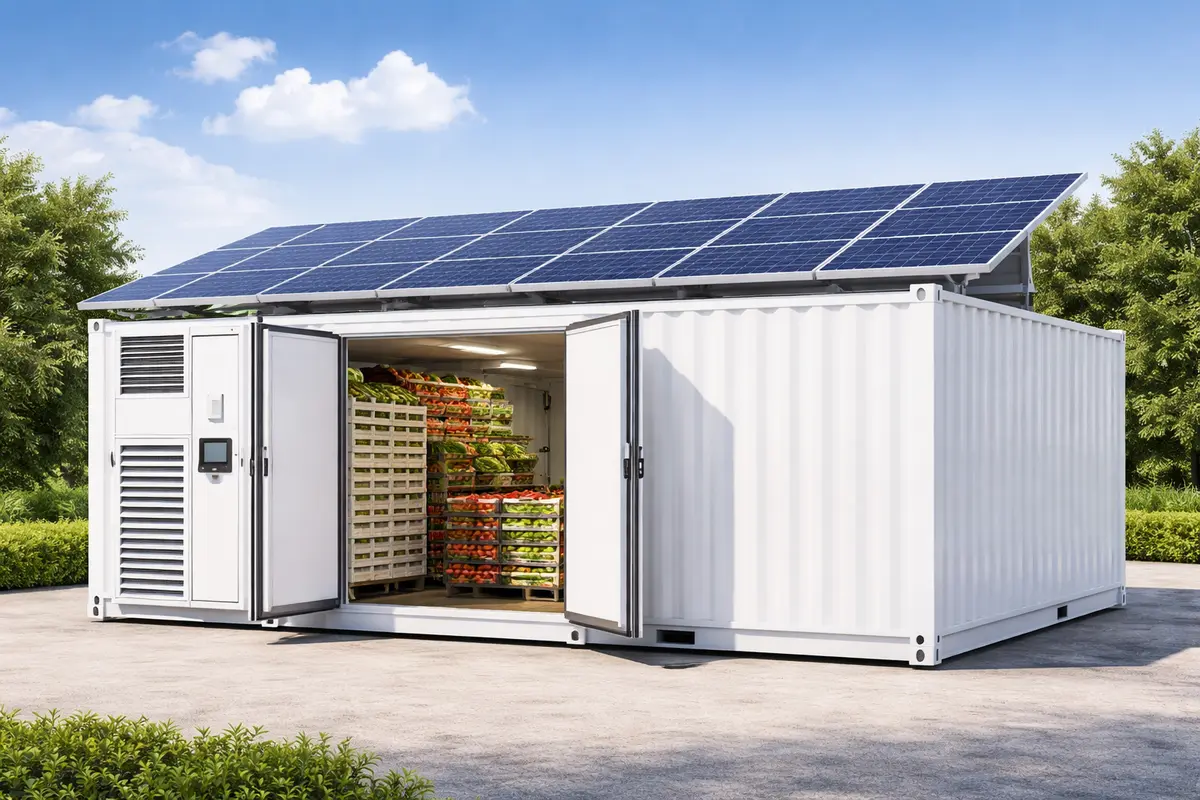
What Determines the Price?
1. Container Size and Capacity
10-20 ft: Suitable for small farms and for use as a movable cold storage container.
20-40 ft: Suitable for commercial-scale agriculture and fisheries.
2. Cooling System
3. Solar Power System
4. Battery Storage: (Most Critical Factor)
Typical Price Breakdown
Here is a general pricing range based on current market trends:
| Component | Price Range (USD) |
|---|---|
| Insulated container | $3,000 – $12,000 |
| Refrigeration system | $2,000 – $15,000 |
| Solar panels + inverter | $3,000 – $20,000 |
| Battery storage system | $2,000 – $25,000 |
| Installation & integration | $1,000 – $5,000 |
| Total Estimated Cost | $8,000 – $60,000+ |
Real-World Example
Now, let’s take a look at a real-world example:
Case: Small Farm Cold Storage (Kenya)
- Container size: 20 ft
- Temperature range: 2-8°C (vegetables)
- Solar power capacity: 5 kW
- Battery capacity: 10 kWh (lithium-ion)
Total cost: ~$18,000
This cold storage solution helped the farmers:
- Reduce post-harvest loss by 30-50%
- Increase storage duration by 2-3 days
- Increase market price by optimizing the time of sale
Why Prices Vary So Much
You may notice a huge price difference between suppliers. In most cases, this is due to:
- Build quality: Better insulation means less energy consumption
- System integration: These systems cost more but save time and labor
- Climate adaptation: Units designed for hot climates need stronger cooling
- Brand and support: Good customer support is important
A cheap system may save money now but could cost more over time or fail during extreme weather conditions.
Is It Worth the Investment?
Yes, it is worth it most of the time. However, this depends on your usage case.
Ideal Scenarios
- Remote locations without access to a power grid
- Farms with high post-harvest loss
- Fisheries and dairy farms
- Food distribution businesses operating in hot climates
Less Ideal Scenarios
- Locations with access to a power grid and cheap electricity
- Low storage requirements
Key Advantages Beyond Price
Even though it is more expensive initially, a solar-powered cold storage system has several benefits:
- Energy independence: No reliance on a power grid
- Lower operating costs: Sunlight is free!
- Reduced food waste: Directly translates to money saved
- Sustainability: Good for the environment
From what I have seen so far, no one goes back to traditional diesel-powered cold storage systems once they make the switch to a solar-powered one.
How to Choose the Right System
When considering the various options, the key points to consider are:
- Daily cooling load (kWh/day)
- Sunlight availability for the region
- Autonomy of the batteries (how long without sunlight)
- Temperature requirements
- Scalability
One mistake people often make is not providing a sufficient solar system and/or batteries. This can cause an inconsistent cooling system, which kind of defeats the entire point.
Final Thoughts
The cost of a solar powered cold storage container can vary greatly; however, the cost can be justified over the long term. The key is not to look for the cheapest option but the best option for your needs.