
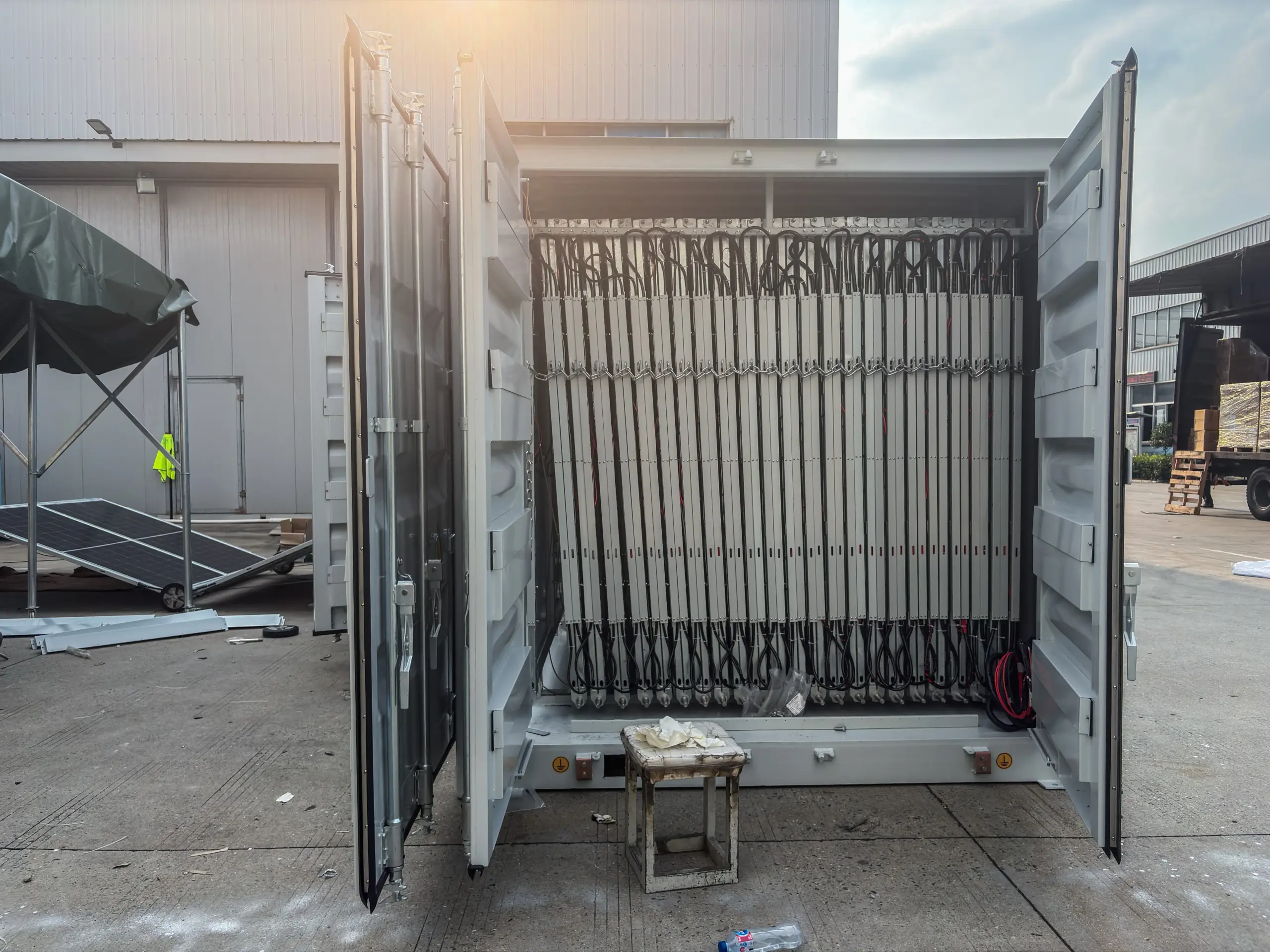
Container solar power systems can be defined as the deployment of solar power systems in a module that is installed in a standard container. These systems can be used as off-grid systems or hybrid systems. They can be easily deployed as they are pre-assembled systems that can be easily moved from one location to another.
At LZY Energy, we specialize in the deployment of mobile folding solar containers that can be easily deployed in the field to produce solar power in a very short time. Here is a detailed explanation of the solar container systems, where they can be deployed, and the technical considerations that can affect them.
What Is a Container Solar Power System?
A container solar power system can be defined as the deployment of the following systems in a standard container of 10ft, 20ft, or 40ft in size:
- Foldable or sliding solar panels
- Hybrid inverter or Power Conversion System (PCS)
- Battery energy storage, such as LiFePO4
- MPPT charge controllers
- AC/DC distribution panels
- Monitoring and Energy Management System
Container solar solutions are designed to meet the needs of the following, compared to the traditional ground-mounted solar solution:
- Mobility
- Rapid installation
- Plug-and-play
- Reduced land preparation requirements
In many instances, the container itself acts as the foundation and the enclosure for the electrical equipment.
Why Are China Container Solar Power Solutions So Popular?
China is one of the leading countries for container solar solutions, thanks to the strength of the supply chain, the cost, and the battery technology. However, it is not just the cost. There are other reasons, such as:
- Integrated engineering design
- Rapid production times
- Container size
- Scalability of power
- Flexibility of shipping
From my experience working with off-grid integrators, the one thing that the client loves the most is predictability. It is no longer just about saving money; it is about saving time. A factory-assembled solution reduces the risk on-site, which is extremely valuable when the site is in the middle of the desert or on a deserted island.
Technical Structure of a Mobile Folding Solar Container
LZY Energy’s mobile folding solar container is centered around a mechanical expansion system. This means that when the container is in use, hydraulic or electric actuators extend the solar panels outside the container shell.
A general structure would be composed of the following components:
- 50kW to 500kW solar capacity
- 100kWh to 1MWh battery capacity
- A hybrid inverter for grid, diesel, and solar energy sources
- Remote monitoring via 4G or satellite communication
A simple technical overview would be:
| Model Type | Solar Capacity | Battery Capacity | Deployment Time | Application |
|---|---|---|---|---|
| 10ft System | 30–80 kW | 50–150 kWh | 1–2 hours | Emergency power, small off-grid sites |
| 20ft Folding | 100–200 kW | 200–500 kWh | 2–4 hours | Mining camps, construction projects |
| 40ft Large System | 300–500 kW | 500 kWh–1 MWh | 2–4 hours | Industrial microgrids, island power |
This allows for maximum utilization of the solar panel surface without needing further land-based infrastructure.
Common Buyer FAQs
1. Can it run independently?
LZY Energy’s mobile solar container can run independently with a sufficient battery capacity and a diesel generator set as a backup. It is often used for rural electrification projects or disaster relief missions.
2. How durable are these systems?
High-quality container solar systems have the following specifications:
- Steel frames with anti-corrosion capabilities
- IP65/IP67 electrical enclosures
- Anti-wind structural reinforcement
- Industrial-grade lithium batteries
Wind resistance is also possible at 30-35m/s depending on the deployment type.
3. What kind of batteries do you use?
LZY Energy makes use of the best LiFePO4 (Lithium Iron Phosphate) battery modules due to the following reasons:
- Excellent thermal stability
- Longer cycle life (6000+ cycles)
- Lower fire risk compared to other lithium-ion batteries
Industry Trends Driving Containerized Solar
Containerized solar energy is at the nexus of three major energy trends:
1) Decentralized Grids
The old model of a few large energy plants is changing to a new model with many small microgrids. Containerized solar energy provides a modular solution that can be combined in a variety of ways.
2) Hybrid Solutions with Diesel
For industries like mining or oil & gas, diesel is the dominant fuel source. However, adding solar energy can reduce fuel consumption by 30-60%, depending on how the load profile is utilized.
3) Increasing Demand for Emergency Power Solutions
Disasters seem to be increasing around the globe. Solar energy provides a clean solution to this problem without the logistical issues associated with fuel.
For example, containerized solar energy systems have been used to provide energy to a disaster relief hospital in Southeast Asia within 24 hours.
Real-World Application
One client in Central Asia is a mining company that has been supplied with a 200 kW folding containerized solar energy system with 400 kWh storage.
Before:
- Diesel consumption: 1,200 liters/day
- Fuel transportation costs: Very high due to remote location
After:
- Diesel consumption reduced by 45%
- Payback period is around 2.8 years
- Significant reductions in CO2 emissions
The key takeaway is: solar did not replace the use of diesel, it steadied the demand and smoothed the peaks.
What Defines a Reliable Supplier?
In determining the quality and worth of China’s container solar power solutions, you must look for:
- Customization capabilities in engineering
- Battery quality certifications such as UN38.3 and IEC
- Structural wind and load calculations
- Pre-shipment test reports
- Remote technical support capabilities
Price is an important consideration, and the overall return on investment is based on the structural integrity and battery life cycles. Tip: ask for detailed single-line diagrams and EMS (Energy Management System) logic. This one document will give you an idea of how in-depth the engineering capabilities are.
Final Thoughts
China’s container solar power solutions represent the direction in which the world is shifting towards flexible, mobile, and intelligent energy systems. Whether it is for temporary use in industry, remote communities, or emergency response, the container solution simplifies the logistical challenges while maintaining the robustness and reliability.
At LZY Energy, we continue to drive the development and evolution of the folding solar container technology, including faster deployment, higher energy density, and better hybridization. As the world globalizes, the mobile and modular solution is the norm, not the exception.