
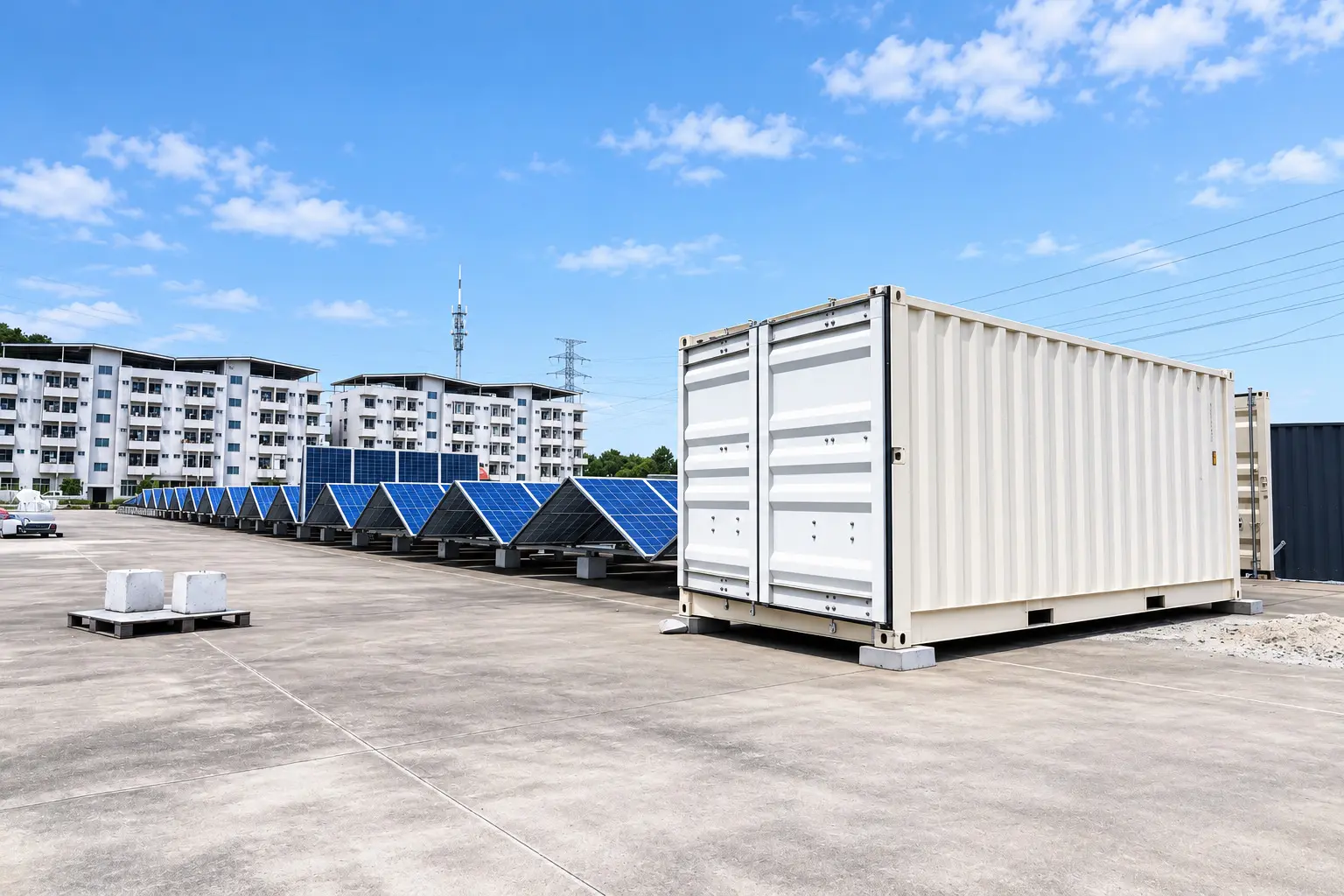
Reliable electricity is essential for construction projects, from operating heavy machinery and power tools to supplying temporary offices, lighting, and worker facilities. However, not every construction site has access to a stable grid connection. Remote locations, limited electrical infrastructure, and changing project requirements often make temporary power systems necessary.
The right construction temporary power solution depends on electricity demand, project duration, site conditions, and operating costs. While diesel generators remain widely used, combining solar power, battery storage, and backup generation offers contractors more flexible and fuel-efficient alternatives.
Power Supply Issues Encountered on Construction Sites
Demand for power on construction projects changes depending on the stage of construction. The initial stage of construction involves minimal equipment use, while late stages feature the use of heavy machinery and equipment such as cranes, welders, concrete pumps, compressors, etc.
Here are the key considerations in selecting power solutions on construction sites:
- Insufficient electrical grid coverage: Construction sites located away from grid networks face difficulties accessing electricity provisions directly from the network. As a result, temporary power solutions become essential for providing electricity supply services.
- Variable construction loads: Different operations conducted throughout construction phases impose varying loads on power systems. Accurate power capacity sizing becomes important in ensuring reliable operations.
- High fuel prices: Construction projects located in remote regions require consistent delivery of fuel supplies to sites. In addition to rising costs of diesel, high expenses of transporting fuel supplies to construction locations also apply.
- Large inrush current: Some construction machinery imposes significant inrush currents upon startup. Examples include compressors, air conditioners, electric heaters, and motor-driven devices. Generators need sufficient reserves to handle high peak loads imposed upon them.
- Shifting construction layouts: The movement of heavy machinery during construction processes also impacts temporary power solutions' flexibility and adaptability. Construction layouts tend to alter as construction works progress; therefore, temporary power solutions should accommodate these alterations.
5 Construction Temporary Power Solutions
Not all construction sites will adopt the same temporary power solution. Contract owners may choose a suitable solution depending on existing grid availability, demand for power, duration of construction projects, and budgets.
1. Temporary Grid Connection
Temporary connection to the local electrical network serves as the most economical approach to supplying power for construction purposes when projects are situated near active grid infrastructure.
It involves installing temporary transformers, distribution cabinets, circuit breakers, protective devices, power lines, and cable routing for connecting to construction equipment and facilities. Electricity from the local grid feeds construction activities through cables.
Suitable applications:
- Urban building developments
- Commercial and industrial constructions
- Projects located near grid connections
The main limitation is the availability of grid capacity. Connection approval, infrastructure upgrades, and installation schedules can also delay project operations.
2. Diesel Generator Systems
Diesel generators provide independent electricity and are widely used when grid power is unavailable or unreliable.
Single generator sets cater to smaller projects while multiple parallel-running sets serve large construction sites. Sizing of the total rated capacity of generator sets depends on maximum load demand, inrush currents of construction equipment, and fluctuations in loads.
Important considerations include:
- Capacity sizing and performance at different loading states.
- Fuel consumption rate during various operation modes.
- Noise emission and compliance with emission requirements.
- Maintenance intervals and availability of replacement parts.
- Arrangements for storing and transporting fuels.
They serve as excellent choices for serving heavy construction equipment and maintaining high levels of power generation for sustained periods. However, operational costs can rise sharply due to increased demands for fuel and generator operation times.
3. Solar-Storage-Diesel Hybrid Systems
A hybrid power system combines photovoltaic generation, battery energy storage, and diesel backup. It provides a practical alternative for construction sites that need independent electricity while reducing fuel consumption.
The system generally operates through an energy management system (EMS):
- Solar panels generate electricity and supply available construction loads.
- Excess solar generation charges the battery storage system.
- Battery energy supports nighttime operations and periods of low solar generation.
- Diesel generators start automatically or according to control settings when additional power is required.
The main advantage is that generators do not need to operate continuously when solar generation and battery capacity can meet site demand.
This configuration is suitable for remote infrastructure projects, large construction camps, road construction, and sites with expensive fuel logistics.
4. Foldable Mobile Solar Containers
A solar-powered containerized energy storage system integrates portable solar panels into modular portable containers for generating solar power, storing it using batteries, converting it using inverters, and managing it via EMS controllers.
Deployable solar container systems cater to contractors who manage distributed temporary operations. The portable nature of the system facilitates convenient deployment to sites for generating power on construction sites.
Key benefits include:
- Rapid assembly of portable solar panel arrays within prefabricated modules.
- Portable modularization of battery banks and inverters
- Easy transportation to various sites.
- Efficient use of solar power generation
- Reduced dependence on fossil fuels
The LZY Energy develops these systems specifically designed for temporary power purposes. Common usage includes supplying power for temporary constructions, worker facilities accommodation, road constructions, and emergency power sources.
As the underlying technologies are mature enough, commercial use cases should increase in number going forward.
5. Battery Energy Storage Systems (BESS)
BESS refers to a temporary power generation technique involving the charging of batteries with energy from generators or grids before releasing the stored energy whenever load demands increase.
The system serves to balance short-term fluctuations in load requirements by discharging stored energy from batteries into the circuit. BESS also assists in minimizing generator operation frequencies to decrease operational expenditures.
Advantages:
- Quick response times when handling sudden changes in load demands.
- Minimization of generator operation times to conserve resources.
- Managing peak loads caused by highly variable construction equipment.
- Silent power provision capabilities compared to diesel generators.
- Flexibility in integrating solar energy generation.
BESS represents a mature technology with proven feasibility. Battery capacities and inverter outputs require careful consideration to ensure optimal functionality. Although sufficient battery storage may exist, inverter outputs may prove insufficient for meeting peak demands.
How to Select the Right Temporary Power Configuration
Prior to choosing appropriate power equipment configurations, it becomes critical first to determine the necessary energy demand requirements on-site.
Calculate Total Power Consumption
Creating detailed lists with all pieces of machinery, their rated capacity, operational periods, starting powers, and types is essential. Motors, compressors, pumps, and welding devices represent specific equipment whose characteristics should receive extra attention.
Estimate Peak and Average Loads
Calculating average electricity consumption helps determine overall energy requirements. Estimations of peak loads determine generator capacities and inverters' ratings.
Example: Low levels of power consumption may be evident during night periods, whereas large amounts of electricity may be required simultaneously upon multiple machine usages.
Consider Project Duration
Temporary projects might benefit greatly from renting generator equipment. Conversely, long-duration constructions could justify purchasing BESS and hybrid energy storage systems for saving fuel expenses.
Evaluate Transportation and Deployment
Projects featuring multiple construction locations necessitate evaluating dimensions, logistics involved in transporting generator equipment, deployment processes, and relocation operations.
Portable containerized generators offer convenience since pre-installed components enable quick deployment.
Check Electrical Safety Requirements
All temporary constructions require proper grounding protection, overload and short circuit protective mechanisms, residual current detection circuits wherever necessary, and durable weatherproof distribution equipment.
Temporary constructions need adherence to established national construction regulations and electrical codes.
Comparing Different Temporary Power Solutions
The following table provides a general comparison of the main options.
| Solution | Main Advantage | Main Limitation | Suitable Applications |
| Temporary grid connection | Relatively low operating cost | Requires grid access | Urban construction |
| Diesel generator | Independent, high-power supply | Fuel and maintenance costs | Heavy construction |
| Solar-diesel hybrid | Reduces fuel consumption | Requires coordinated system design | Remote construction |
| Foldable solar container | Mobile and renewable generation | Depends on sunlight and system capacity | Temporary and remote projects |
| Battery storage | Fast response and peak support | Limited stored energy | Backup and peak-load management |
In practice, combining two or more technologies often provides better results than relying on a single power source.
Reducing Operating Expenses Through Hybrid Energy Management
Minimizing operational expenditures is important in improving the economic performance of construction sites with limited grid connectivity. It involves prioritizing solar power generation and battery discharges ahead of operating generators.
For example, solar panels produce electricity which supplies office facilities, lights, and construction equipment. Extra produced energy charges battery packs while stored energy serves nighttime uses before generator operations commence.
However, cost reductions depend heavily on solar resources availability, battery capacity sizes, effective scheduling of construction equipment, efficient use of generators, and daily load curves.
From a design perspective, maximizing solar panel arrays is not always beneficial. Instead, aligning power generation and storage according to construction needs becomes vital.
Conclusion
Diesel generators are no longer the most viable solution for temporary power in construction sites. While grid connection continues to make sense within an urban environment where the project is being undertaken, there are other solutions such as solar-storage hybrid options for those who want to lower the amount of diesel burnt in order to generate their electrical power.
LZY Energy offers a solution which includes its foldable mobile solar containers, which could prove quite useful in generating renewable power for those areas of construction sites which require portability and flexible power deployment options. Combined with battery storage and standby generator power, they would ensure a stable supply of electrical power in these locations.
Choosing an appropriate configuration requires prior analysis of the actual needs of the particular construction project involved. Having access to accurate information regarding your energy requirements will help contractors ensure effective operations without overspending on energy costs.
FAQs
Which Temporary Power Solution Would Be the Cheapest in Construction?
Depending on whether you have grid access to consider, your project timeline, as well as overall energy consumption during each day of operations, your cheapest choice might involve using the existing grid, whereas for more isolated projects, solar battery hybrid setups would be better suited.
Can a Mobile Solar Container Provide Electrical Power for My Construction Site?
A properly designed mobile solar container would enable construction site activities since it is equipped with photovoltaic solar panels, battery storage systems, and inverters necessary to deliver electricity to your machines and tools.
How Many Watts Does My Construction Site Need?
That largely depends on the nature of construction activities at the site since small residential projects would not consume too many watts compared to major industrial-scale construction.
Are Battery Energy Storage Systems Effective for Temporary Construction Projects?
Battery energy storage solutions work effectively in tandem with solar power and even diesel generators. Batteries can store excess power generated, providing backup power whenever there is insufficient sunshine or other similar reasons.
Are Foldable Mobile Solar Containers Suitable for Multiple Sites?
Absolutely! Their modular design makes them ideal candidates for projects involving various temporary constructions requiring energy deployments in different locations.