
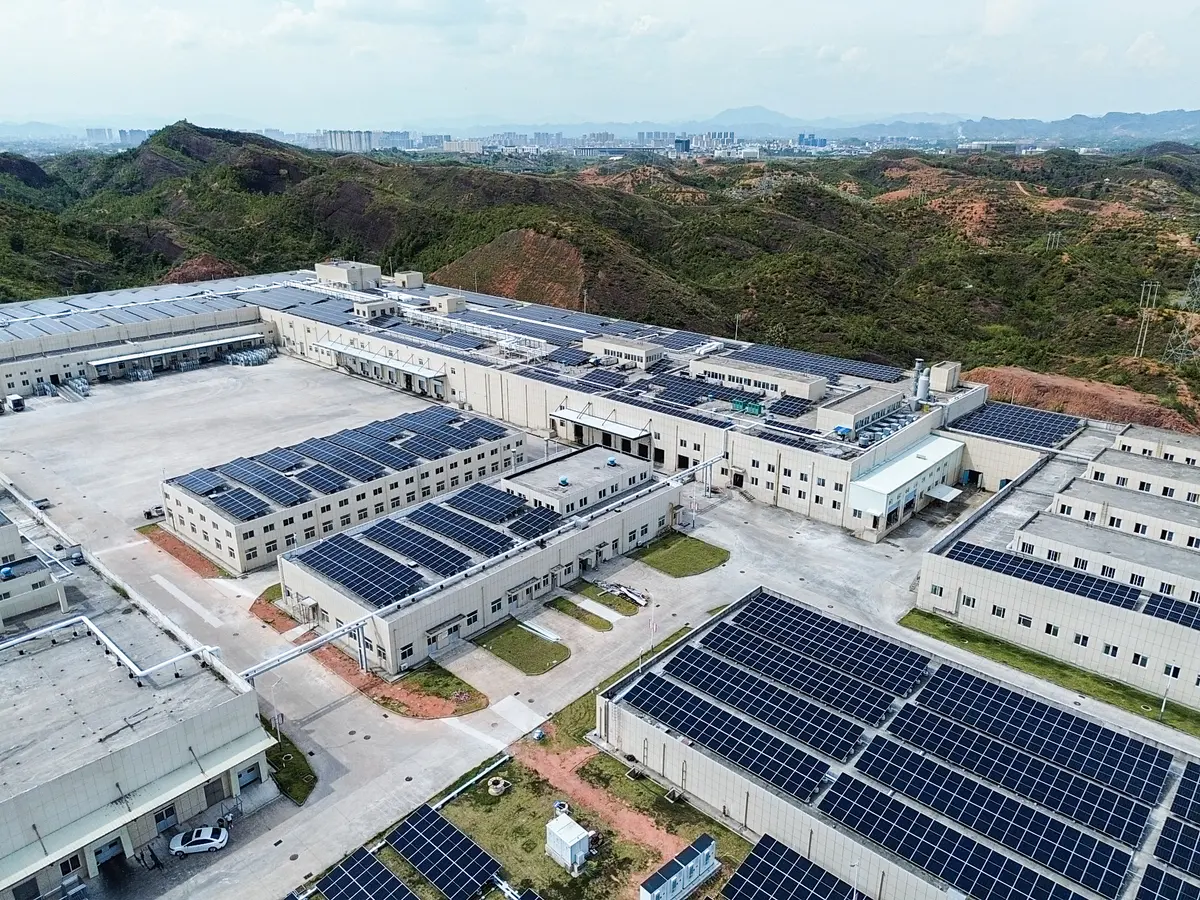
Large scale solar systems refer to utility-scale installations intended to produce huge amounts of electricity, from several MW up to hundreds of MW. The development of such projects goes beyond the installation of solar PV panels; it includes thorough planning, site preparation, grid connectivity, equipment selection, funding, and system operation.
A number of criteria influence the economic viability of these installations, including solar resources availability, costs of equipment, cost of electricity, government policies, and energy storage needs. In view of the ongoing decrease in costs of solar technology, large-scale solar power has become one of the most promising options for new electricity generation.
What is a large-scale solar power system?
A large-scale solar power system usually entails a utility-scale ground-mounted photovoltaic (PV) system. Such systems differ from household solar power systems since they are designed for feeding electricity to thousands or even millions of customers.
Large-scale solar power plants consist of:
- Solar PV modules generating electricity from solar radiation
- Mounting structures used to hold the PV panels
- Inverters converting DC electricity into AC current
- Transformers and switchgears providing voltage control and protection
- Operating control systems
- Battery energy storage systems (BESS) in some cases
With their size, such systems allow developers to lower the cost per watt due to the economies of scale. However, the start-up costs may be substantial, often reaching several million dollars before generating the first kilowatt-hour.
How Are Large-Scale Solar Projects Constructed?
The construction of a large solar power system usually follows several major stages.
1. Site Selection and Feasibility Study
Site selection is the very first step of development, during which developers have to consider:
- Intensity of solar radiation
- Size of the available territory
- Availability of transmission lines
- Local regulations and legislation
- Environmental considerations
There is no guarantee that the project will be successful simply because there is enough sunlight at the site. The availability of the grid infrastructure is of equal importance – building a solar farm away from transmission lines will be connected to high expenses that make the project unprofitable.
2. Engineering and Design
Next, the engineers have to design the entire solar farm, including:
- Panel layout
- Electrical scheme
- Capacity of the inverter
- Cabling plan
- Energy storage
- Safety systems
The modern designs often rely on the use of complex computer software that allows optimizing panel orientation and minimizing shading losses.
3. Construction and Installation
Construction stage is characterized by:
- Land preparation and foundation works
- Mounting system installation
- Solar panels installation
- Electrical installation and installation of the inverter
- Grid connection construction
- Testing and commissioning
Depending on the size of the project, construction may take from several months to over a year.
The Economics Behind Large-Scale Solar Power
The financial performance of a solar project is usually measured through capital expenditure (CAPEX), operating expenses (OPEX), and the levelized cost of electricity (LCOE).
Investment Costs
The main cost items are:
- Modules
- Inverters
- Structures
- Electrical equipment
- Construction labor
- Interconnection to the grid
- Engineering and permits
According to data provided by the International Renewable Energy Agency (IRENA), solar photovoltaics' costs decreased drastically during the last ten years making solar power one of the cheapest forms of electricity in some locations.
However, besides equipment costs, land price, financing conditions, and local construction standards can play an essential role in investment costs.
Operational Costs
Solar power plants have low operational costs compared to conventional power plants since they do not need any fuel.
Common operating activities are:
- Panel cleaning
- Equipment inspections
- Inverter maintenance
- Monitoring performance
- Vegetation control
Even though maintenance expenses are low, proper operation management is necessary since small loss of efficiency due to millions of panels will lead to significant reduction of revenue.
Electricity Revenue and Investment Return
The income of a solar power plant mainly comes from selling produced electricity. Investment return depends on:
- PPAs
- Locals energy prices
- Governments' incentives
- Yearly amount of energy production
- Costs of financing
In locations where electricity demand is high and there is enough sunlight, solar power plants can give very good long-term return on investments.
Energy Storage in Large Solar Energy Systems
Another issue with solar energy is its variability, where solar panels produce energy only during the day and do not produce energy at all at night.
Large scale solar projects include battery energy storage, which helps to:
- Store excess energy produced during the day
- Provide energy during high-demand hours
- Stabilize the energy grid
- Facilitate renewable energy production
Solar generation along with the battery storage system becomes a trend in modern days because it enables renewable energy to become more stable than depending on the weather conditions.
Challenges Associated With Large-Scale Solar Power Generation
Although the sector shows great growth, there are certain challenges associated with large-scale projects in the solar energy field.
Land Resources
Large-scale solar installations need substantial land resources. There needs to be the balance between power generation and preservation of the environment.
Grid Connectivity
Some regions experience higher growth in solar energy installations compared to expansion of transmission capacities. It may lead to delays in the project implementation or even lower its economic attractiveness.
Equipment Availability and Reliability
Large-scale installations need many thousands or even millions of pieces of equipment. It is crucial to find reliable suppliers because any equipment breakdown may cause costly stoppages.
Project Longevity
It is expected that solar installations will operate for 25 years or more. Therefore, it is important to choose high-quality equipment and maintenance services.
Future of Large Scale Solar Power
The future of large scale solar power looks very bright due to decreasing costs of technologies involved, increased electricity demand and energy transitions worldwide.
Moreover, the whole industry tends to be more and more integrated, and there will be more and more use of solar farms together with energy storage facilities and smart energy management systems.
It is not less important for big companies that are considering investments into renewable energy sources to choose partners that have rich experience than it is to choose effective solar technologies. At LZY Energy, we focus on providing integrated solar and energy storage solutions for our clients.
Large scale solar power has stopped being only environmentally friendly choice, as it can be a good long term investment if you manage your business properly.