
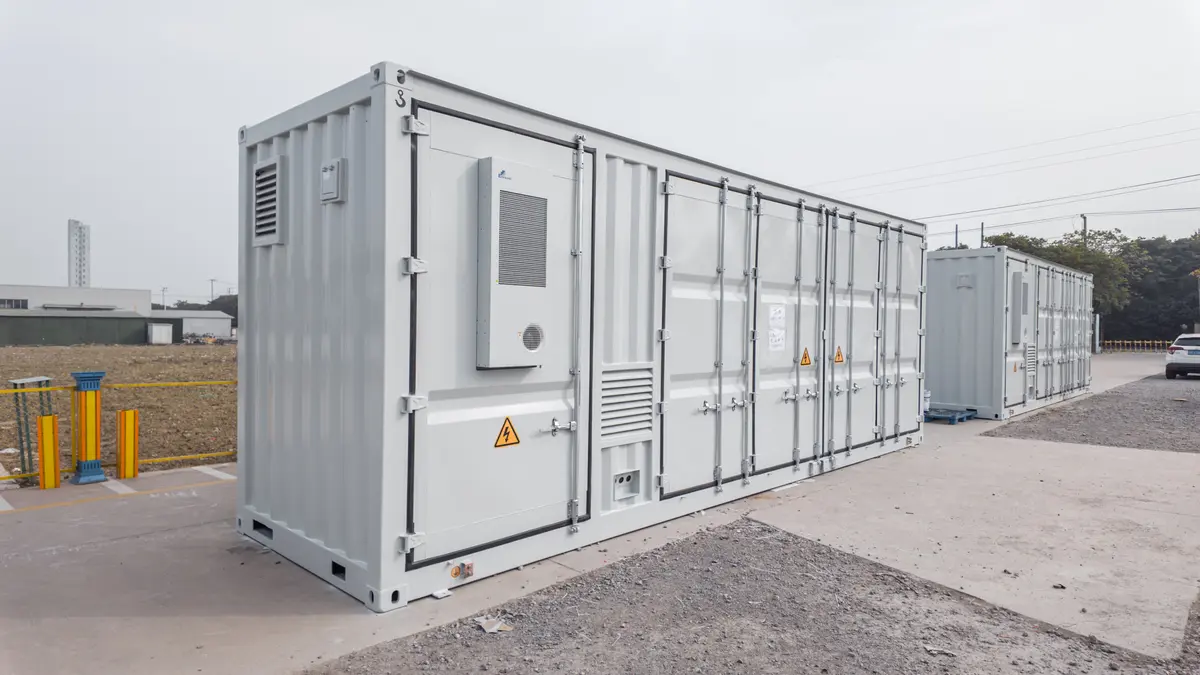
In the past few years, battery storage shipment containers have seen fast evolution. Some of the key advancements that have been made include increased energy density, liquid cooling, artificial intelligence-based energy management systems, improved fire safety features, modularity, and compatibility with renewable energy technologies. These breakthroughs are ensuring greater safety, efficiency, and ease of deployment for BESS shipping containers.
Why Container-Based Battery Storage Is on the Rise
Typically, traditional battery storage solutions demand the erection of an entire building and extensive construction work. The advent of container-based batteries solves most of these problems through its factory assembly and ready-to-use design.
Some of the main components used in container-based battery solutions are:
- Battery Racks
- Battery Management Systems (BMS)
- Power Conversion Systems (PCS)
- Energy Management Systems (EMS)
- Cooling solutions
- Fire extinguishing systems
- Monitoring and communications equipment
With all these features packed into a regular shipping container, the installation process becomes very easy.
Important Innovations for Battery Storage Shipping Containers
1. Higher Energy Density through Enhanced Battery Chemistry
One of the major innovations involves improved battery cell technology.
Several years ago, a 20-foot container could store up to 1–2 MWh. Now, many manufacturers can offer capacity exceeding 5 MWh in the same sized box.
The reasons for that are as follows:
- Advancements in LiFePO4 (LFP) battery cell chemistry
- Large capacity battery cells (280Ah, 314Ah, and above)
- Enhanced battery pack design
- Increased internal efficiency
With increasing energy density, developers have less trouble using land areas as well as cutting installation expenses.
2. Liquid Cooling Systems Instead of Old Air Cooling Systems
Liquid cooling has become one of the most significant innovations for containerized BESS.
While air cooling systems work quite efficiently at moderate temperatures, liquid cooling systems provide coolant to battery modules and allow better operation conditions.
Some of its advantages include:
- Greater temperature stability
- Higher efficiency of charging and discharging cycles
- Increased battery longevity
- Smaller temperature difference between battery cells
- Better performance in safety aspect
3. Fire Protection Systems with Advanced Technologies
Ensuring safety is a major priority in battery storage systems.
The current battery storage systems are designed using the following safety measures:
- Early detection of gas leaks
- Monitoring of smoke generation
- Thermal runaway monitoring
- Using aerosol or clean agent fire suppression systems
- Emergency ventilation system
- Isolation control system
These systems prioritize early detection of problems rather than just suppressing the fire.
4. AI-Driven Energy Management
AI technology is starting to become more prevalent in energy storage projects.
Current EMS can:
- Forecast energy needs
- Optimize charge/discharge cycles
- Predict solar power production
- Detect battery malfunctions
- Improve cycle efficiency
AI-driven systems can charge the battery when the electricity cost is low and discharge the battery when electricity rates are high. Doing so can maximize profits from such projects.
From personal experience, I can say that intelligent software plays a role as significant as physical batteries themselves. The project owner is more concerned with its efficiency throughout the whole 10–20 years of operation.
5. Scalable Modular Design
Old energy storage solutions were highly customized. Modern systems consist of standardized building blocks that work together.
The benefits are:
- Rapid deployment
- Simpler maintenance
- Scalability
- Less engineering overhead
A project could begin with one unit and continue to add more and more without requiring changes to the design itself.
This type of architecture is perfect for large-scale industrial sites and solar/wind energy providers.
Innovation Comparison
| Feature | Earlier Generation Systems | Modern Systems |
|---|---|---|
| Energy Density | 1–2 MWh/container | 4–6+ MWh/container |
| Cooling Method | Air Cooling | Liquid Cooling |
| Monitoring | Basic Monitoring | AI-Assisted Monitoring |
| Fire Protection | Single-Layer Protection | Multi-Layer Protection |
| Scalability | Limited | Highly Modular |
| Integration | Standalone Storage | Renewable Energy Integration |
Integrating with Solar & Hybrid Power System
A second important trend is integrating battery storage containers with renewable energy power systems.
Examples of applications may include:
- Solar farms
- Wind energy plants
- Telecom base station
- Mining sites
- Microgrids
- Rural villages
In such cases, battery storage containers allow storage of solar power produced during daytime and deliver power at night or during cloudy weather.
At LZY Energy, we have seen rising interest in integrating battery storage containers with solar container systems. This combination will provide fast-deployable power for emergency use, military activities, and temporary sites.
It should be noted that the capacity to move both generation and storage systems in a portable manner is bringing about many new possibilities in power generation and distribution.
Real World Example
Take for instance a telecommunication network set up in an area where power from the grid is inconsistent.
In this case, a conventional arrangement would involve significant use of diesel engines, resulting in:
- Expensive fuel
- Maintenance costs
- Carbon emissions
However, with the inclusion of:
- Solar folding container
- Battery storage container
- EMS system
the operators are able to minimize the use of generators by more than 60-80%.
This technique is being adopted increasingly in the telecommunications industry around the globe.
What Is Coming Up Next?
It looks like future developments will include:
- 7 MWh+ capacities
- Sodium-ion batteries
- AI optimization improvements
- Digital twins
- Rapid deployment with plug-and-play modules
- Better cybersecurity measures
As the implementation of renewable energy expands, the need for containerized energy storage becomes crucial.
Conclusion
Modern battery storage shipping containers have come a long way from their predecessors, which were nothing more than battery cabinets. Advancements such as increased energy density, liquid-cooling technology, artificial intelligence-controlled management, superior fire protection, and renewable energy capacity are changing the landscape of the entire industry.
All of this contributes not only to a reduced cost of battery storage but also to increased safety and efficiency. Whether you need them to store energy generated by large solar fields, help you build a more reliable telecommunications system, support your factory operations, or provide energy for your microgrid, battery storage containers can become your best choice.